OEM & Co-packing
JAKIM Halal Certification for Food Products in Malaysia: The Complete Guide
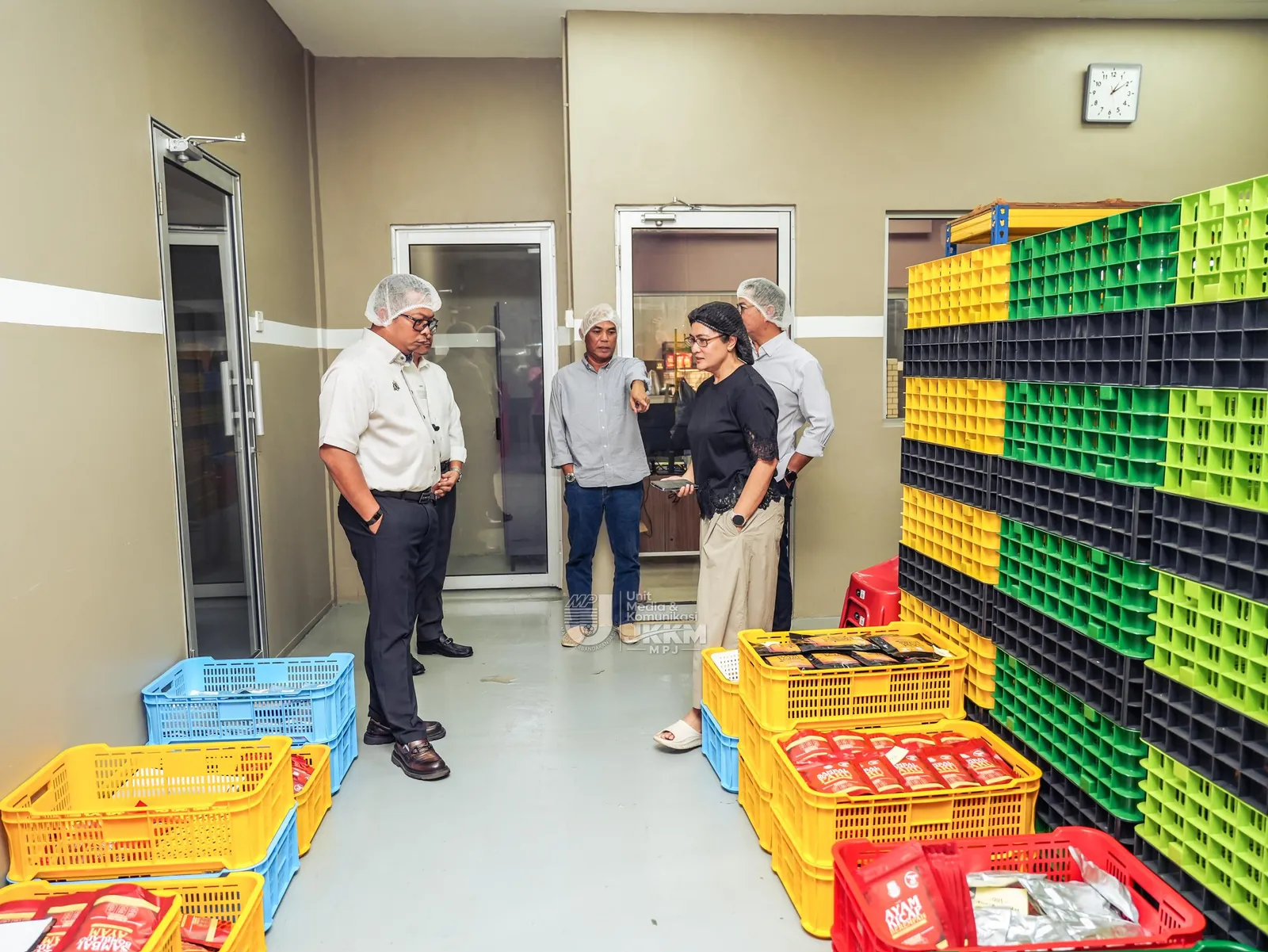
The finished-goods store at DapoGo's Melaka Halal Hub factory. JAKIM's halal manual requires storage to be dedicated to halal raw materials and products only.
A packaged food product in Malaysia is halal-certified under JAKIM’s food and beverage product scheme, applied for online through MYeHALAL. The applicant needs SSM registration, a local authority licence, a Ministry of Health food premises registration and three months of operation. Fees are RM20 to process plus RM100 to RM1,000 a year by turnover. The certificate lasts two years.
This guide is for food founders who want the Malaysia halal logo on a packaged product: a Malaysian brand selling at home or abroad, a foreign company making food in Malaysia, or a diaspora brand in the UK or Singapore that wants a Malaysian-made, halal-certified range. It is part of DapoGo’s guide to halal OEM and co-packing in Malaysia, written from our own retort food factory at Melaka Halal Hub.
Every rule, fee and time limit below comes from JAKIM’s Malaysia Halal Certification Procedure Manual (Domestic) 2020, as amended by Circular No. 1 of 2026, in force since 1 April 2026. The manual is published in Malay; the translations here are ours. Check with JAKIM or the state religious department before you apply, as procedures can change again.
Key takeaways
- Only JAKIM and the state Islamic councils or departments can issue Malaysian halal certification and allow use of the logo.
- A packaged product needs its own certificate under the product scheme. A co-packer’s OEM certificate does not cover your brand.
- A company registered abroad that has food contract-manufactured in Malaysia pays RM2,500 (ASEAN) or RM10,000 (elsewhere) per application.
- Finished goods that are simply relabelled in Malaysia, with no process here, cannot be certified.
On this page17 sections
What is JAKIM halal certification, and is it mandatory?
JAKIM halal certification is the Sijil Pengesahan Halal Malaysia (SPHM), the official confirmation that a product, premises or service is halal. It is not mandatory: the advisory firm Emerhub says Halal certification is voluntary under Malaysian law.
The mark is controlled: on 4 December 2025 the Deputy Religious Affairs Minister told the Senate that only JAKIM and the state Islamic councils or departments may issue the certificate and the Malaysia halal logo.
That control rests on the Trade Descriptions (Certification and Marking of Halal) Order 2011. The government has said labels such as “Muslim Choice” are not recognised halal certification, and JAKIM’s halal management director said in 2021 that “no pork” or “pork free” does not show a premises is halal. If your buyers expect halal, the SPHM and the logo are the only marks that count.
Plenty of businesses hold one. A written parliamentary answer reported by Utusan Malaysia put the number of SPHM holders at 9,520 companies in November 2024: 5,449 (57%) non-Bumiputera companies, 3,803 (40%) Bumiputera companies and 268 foreign-owned. How halal fits alongside MeSTI and HACCP is covered in selling packaged food in Malaysia: MeSTI, halal or HACCP.
Why does a Malaysian halal certificate matter for export?
Because it is the certificate the government is working to get recognised abroad. The Prime Minister’s Department says it is committed to expanding recognition of the SPHM, especially for smaller firms, and told Parliament that Malaysia’s halal exports were worth RM39.44 billion in the second quarter of 2025, from 1,499 halal exporting companies, 956 of them micro, small and medium enterprises, as Malay Mail reported.
Each destination country still applies its own labelling rules: the manual says products for markets outside Malaysia follow the labelling requirements of the country concerned. Who registers what when you ship halal food to Singapore or the UK is in exporting halal food from Malaysia to Singapore and the UK.
Which certification scheme fits a packaged food product?
The food and beverage product scheme. Malaysia’s domestic certification has nine schemes: food and beverage products, cosmetics, pharmaceuticals, food premises, consumable goods, logistics, slaughterhouses, contract manufacturing/OEM, and medical devices. Three of them are easy to confuse when you make food:
| Question | Food and beverage product scheme | Food premises scheme | Contract manufacturing/OEM scheme |
|---|---|---|---|
| Who applies | Manufacturers, repackers, central kitchens, brand owners | Restaurants, cafes, canteens, bakeries, kiosks and similar | Factories that make products for other companies |
| What it certifies | The products applied for | Every menu item at the premises | The manufacturing service, not the products |
| Logo on the pack | Yes, once approved | Shown at the premises or on the menu | No, unless the product has its own product-scheme SPHM |
| Certification fee | RM100 to RM1,000 a year | RM100 (restaurant or cafe) | RM100 to RM1,000 a year |
| Valid for | Two years | Two years | Three years |
A restaurant that also sells its dishes in pouches needs two different schemes; that case is covered in restaurant dish to retort pouch.
Who can apply, and what rules an application out?
A registered, licensed business with a Ministry of Health food premises registration that has operated for at least three months and handles only halal products. An application is ruled out if the company also makes or distributes non-halal products, uses a name resembling a non-halal product, or only relabels finished goods with no process in Malaysia.
Procedure 5 sets the conditions for every application. For a food product company, the ones that matter are:
- A valid business registration with the Companies Commission of Malaysia (SSM), or an equivalent cooperative or statutory registration.
- A valid local authority (PBT) licence or approval, or a supporting letter from a government agency.
- A valid food premises registration from the Ministry of Health’s Food Safety and Quality Division (BKKM). Under the food product scheme every premises needs one.
- At least three months of full operation before a new application, or one month at a new site if you have moved.
- Halal products only, including any trading products you store and sell.
- Every product applied for: an application must cover all products still made at the premises.
- No “halal” in names: company, product, ingredient and brand names may not use the word or imply the product is for Muslims.
Procedure 6 also rules out one brand used for both halal and non-halal products in Malaysia, names such as ham, bak kut teh, bacon, beer, rum, hot dog and char siew, and products at an early R&D stage that are not ready to sell.
A product still in R&D can be applied for once it is ready to sell: its raw materials are available to check, its ingredients and label will not change, a trial or pilot run has been done on the production line, and management has approved it. In OEM work that production-line run is the pilot batch. At DapoGo a pilot batch is 300–500 pouches per SKU, described in retort pilot batch.
Can a foreign company get JAKIM certification for food made in Malaysia?
Yes, if the product is actually made in Malaysia. The manual sets separate fees for a company or applicant registered abroad that manufactures here. Its processing fee is RM200 instead of RM20. When its products are contract-manufactured in Malaysia, the certification fee is RM2,500 per application for a company from an ASEAN country and RM10,000 per application for a company from any other country.
What it cannot do is import finished goods and relabel them. Finished products, local or imported, that are relabelled without any process in Malaysia are not eligible. For a diaspora brand or a foreign founder, that leaves two practical routes:
- Manufacture in your own Malaysian premises, and meet every condition above, including the three months of operation and the Muslim-worker rule.
- Use a Malaysian co-packer that already holds the OEM scheme certificate, and apply for your product under the food product scheme, where brand owners are eligible applicants.
The second route, building a brand on someone else’s factory, is laid out in start a food brand without owning a factory.
What staffing does JAKIM require?
Micro and small companies need at least one Malaysian Muslim worker in the processing area on every shift; medium and large companies need two. Small companies also need a Halal Supervisor, and medium and large companies a Halal Executive at each branch plus an Internal Halal Committee.
Procedure 18 sets these by industry category, measured by annual turnover:
| Category | Annual turnover | Muslim workers in processing | Halal officer | System |
|---|---|---|---|---|
| Micro | Under RM300,000 | At least 1, every shift | No specific role | IHCS |
| Small | RM300,000 to RM14,999,999.99 | At least 1, every shift | Halal Supervisor | IHCS |
| Medium and large | RM15 million and above | At least 2, every shift | Halal Executive at each branch, plus an Internal Halal Committee | HAS |
Those Muslim workers must be Malaysian citizens in permanent posts, working in the processing area for the whole operation or shift. A Halal Supervisor is a permanently employed Malaysian Muslim who supervises the processing area.
A Halal Executive must be Muslim, a Malaysian citizen and permanently employed, hold at least a Diploma in Halal Management (or have five years of halal management experience), and hold a Halal Executive certificate from a training provider registered with JAKIM’s Halal Professional Board. Falling short on Muslim workers is graded a major non-conformance at monitoring, so a foreign-owned factory should plan its shift rosters around these numbers from day one.
What are IHCS and HAS, and which documents do you need?
They are your written internal halal control system, the thing the auditors test. Small and micro companies build an Internal Halal Control System (IHCS): a halal policy, a raw-material (or halal-risk) control procedure, and a traceability procedure. Each must describe the work exactly as it is done on the floor and be recorded so it can be checked at audit.
Medium and large companies build a Halal Assurance System (HAS), with an Internal Halal Committee of at least four members: a chair, the Halal Executive, a purchasing representative and a processing or operations representative. Both systems follow JAKIM’s MHMS 2020 manual.
Alongside the system, have these ready before the audit:
- Food handler training certificates for every food handler, from a Ministry of Health-recognised institution.
- Valid anti-typhoid vaccination for every food handler.
- Halal awareness training for new staff within three months of joining, repeated at least every three years.
- Records: the application file, the MHMS file, staff and training records, raw-material purchase records, pest-control records and processing records, kept for at least three years. A new application needs at least three months of them.
- A prayer room or space for Muslim workers.
- Hygiene and law: good hygiene or manufacturing practice (GHP or GMP), and compliance with MS 1500:2019 Halal Food, the Food Act 1983, the Food Regulations 1985 and the Food Hygiene Regulations 2009.
What does JAKIM check on ingredients and the label?
That every ingredient can be traced to its original manufacturer and every name matches the label, including the product name in MYeHALAL. Animal-derived ingredients need a valid halal certificate, and anything without a recognised certificate needs documents showing its composition, flow chart and source.
For raw materials, Procedure 17 requires:
- Animal-derived ingredients must carry a valid halal certificate from a competent authority or a recognised halal certification body.
- Ingredients with no halal certificate, or certified by a body JAKIM does not recognise, need full supporting documents: composition, flow chart and source.
- All ingredients are declared in the MYeHALAL form in detail, exactly as on their own labels, with real names rather than only trade names.
For the finished product, the weight or volume must meet what the label states. Packaging and labelling materials must themselves be halal, safe and not contaminate the product. Labels may not use religious terms such as the names of Allah or “makanan sunnah” (sunnah food).
Products for the Malaysian market are labelled in Malay and/or English, subject to the other labelling laws. Everything else a pack must carry is in packaged food labelling in Malaysia.
Who may use the Malaysia halal logo, and what goes next to it?
The Malaysia halal logo is allowed only by JAKIM or a state Islamic council or department through the SPHM, so it goes on a pack only once your product is certified. The label then shows the product name, the certificate holder’s name and address, and the logo with its MS number and the last 10 digits of the file reference number.
The logo may be printed in any suitable colour without changing its specification, but not used in advertising except with the certified product, and never on name or business cards. A co-packer’s OEM certificate does not let it print the logo on your product; the co-packer section below explains why.
How much does JAKIM halal certification cost?
The official fees are small: RM20 to process each application, then RM100, RM400, RM700 or RM1,000 a year by annual turnover, paid within 14 working days of the charge letter in MYeHALAL. The same rates apply to new and renewal applications.
| Applicant | Annual turnover | Processing fee | Certification fee |
|---|---|---|---|
| Micro | Under RM300,000 | RM20 | RM100 a year |
| Small | RM300,000 to RM14,999,999.99 | RM20 | RM400 a year |
| Medium | RM15 million to RM50 million | RM20 | RM700 a year |
| Large | Over RM50 million | RM20 | RM1,000 a year |
| Registered abroad, contract-manufacturing in Malaysia | ASEAN / other countries | RM200 | RM2,500 / RM10,000 per application |
A late payment gets the application rejected, and you start again. Fees paid are not refunded and cannot be moved to another application. A reprinted certificate costs RM50.
Claims that certification runs to tens of thousands do not come from JAKIM. In 2021 its halal management director, Bukhari Md Akhir, told Getaran: Dakwaan bahawa fi pensijilan halal ini mahal sehingga mencecah RM20,000 adalah tidak benar sama sekali.
In English: the claim that halal certification fees reach RM20,000 is wholly untrue. The compliance firm Taqyid reaches the same view in its 2026 cost guide: the impression that certification is expensive comes from everything around the official fees, such as consultants, lab tests and staff time.
How do you apply in MYeHALAL, step by step?
There are nine steps, from a MYeHALAL account to a certificate you print yourself. The scheme and the manufacturer’s address decide whether JAKIM or a state department handles your file, and you cannot ask to move it. The service is listed on the MyGovernment portal.
Following Parts V to VIII of the manual:
- Register a MYeHALAL user account with your SSM (or equivalent) registration number. The authority verifies it within 24 working hours.
- Complete the online application: choose the right scheme and category, declare every ingredient by its real name, and list no more than 100 products in one application.
- Send the supporting documents to the authority handling your file within five working days of submitting the form.
- Adequacy audit: an officer reviews the form and documents, and can postpone or reject an application with insufficient information.
- Pay the fee within 14 working days of the fee letter. After that letter is issued, no products can be added.
- Field audit at your premises, after the fee is received.
- Answer any non-conformance reports (NCRs) on time, in writing, with documents and photographs.
- Decision by the Malaysia Halal Certification Panel.
- Print your certificate in MYeHALAL. The SPHM is issued within five working days of the panel’s decision.
How long does halal certification take?
The MyGovernment portal lists the domestic halal certification service at 15 to 30 working days. That is processing time only. A new company also needs three months of full operation, and three months of records, before it can apply at all.
Three of the manual’s own windows already allow up to 24 working days: five for documents, 14 for the fee, and five for the certificate after the panel decides. The adequacy review, audit scheduling, NCR replies and panel meeting come on top, so plan for the upper end of the portal’s range.
What moves you to the slow end:
- Documents arriving after the five-working-day window, or an application filed under the wrong scheme or category, which is rejected.
- Asking to move the field audit. The authority sets the date and the applicant may not change it; a genuine need must be raised formally and at once.
- Unanswered NCRs. A follow-up or repeat audit happens only once per application, and failing to answer NCRs on time can lead to rejection.
- Expecting the fast track. The Malaysia Halal Certification Quick Initiative (ISPHM) is for whitelisted holders of at least five years with non-critical applications. New applications do not qualify.
Using a co-packer: who holds the halal certificate for your product?
The factory holds a certificate for its service; your product needs its own. A contract manufacturer must hold SPHM under the contract manufacturing/OEM scheme before it may make products for other companies, and every product that wants the halal logo applies under the relevant scheme.
Procedure 18(8)(b) is explicit: Skim ini tidak boleh digunakan sebagai perakuan halal ke atas produk yang dikilangkan
. In English: the OEM scheme cannot be used as halal certification of the products the factory makes.
The logo rule matches. An OEM-scheme holder may not use, print, stick or display the Malaysia halal logo on products it makes unless the product holds SPHM under a product scheme. JAKIM set this out when it introduced the OEM scheme in Halal Certification Circular No. 1 of 2018. The compliance guide ManaHalal calls the belief that a certified factory lets you print the logo the most expensive misunderstanding in the OEM model.
For a brand owner, the sequence is:
- Confirm the factory holds a valid OEM-scheme SPHM before you apply for your product; the manual puts that check on the applicant.
- Sign a written contract or agreement between the factory and your company. A missing contract is a non-conformance.
- Decide who applies for the product. Brand owners are eligible applicants under the food and beverage product scheme, as are manufacturers.
- Plan any change of factory. Switching contract manufacturer is one of the grounds for cancelling an SPHM.
For a brand owner with no premises of its own, the manual says two things: the scheme and the manufacturer’s address decide which authority handles the file, and the field audit covers processing and premises. We found no provision in the manual saying which premises conditions, such as Muslim workers or three months of operation, apply to a brand owner without premises. Confirm that with JAKIM or the state department before you apply.
At DapoGo, our OEM rate card lists the halal application, with artwork, lab tests, nutrition facts and barcodes, as excluded unless stated. So settle who applies at the consultation (RM250), not after the pouches are printed. How to vet a factory is in choosing a retort co-packer in Malaysia, the recipe question in private label or your own recipe, and our own stages in the DapoGo OEM process.
After approval: how long is the certificate valid, and how do you renew it?
A food and beverage product SPHM is valid for two years; an OEM-scheme certificate three years. Holders of at least five years with a clean record and an effective halal management system may be offered five-year validity. Renewal is filed as early as six months and no later than three months before expiry.
An expired certificate’s renewal counts as a new application, products cannot be added in a renewal, and product details on a certificate cannot be amended; both need a new application.
While the certificate runs:
- Officers may monitor without notice.
- The original, valid SPHM is displayed at all times at the address on the certificate.
- Changing or adding a halal-certified supplier without telling the authority in writing is a minor non-conformance; adding a supplier of doubtful halal status is major; so is displaying an expired SPHM.
- If a certificate is withdrawn, the company’s MYeHALAL account can be frozen for at least three months.
The certificate itself is now digital. Since 5 May 2025, JAKIM issues certificates electronically (e-Cert) and approved applicants print their own; a physical copy is requested by letter and charged as a reprint.
Quick questions
Do I need a halal consultant to apply?
No. The manual says the authority deals directly with the company or applicant, not through third parties or middlemen such as consultants. You can hire help to write your IHCS or HAS documents, but the application and the audit stay between you and JAKIM or the state department.
Can a company with non-Muslim owners get halal certified?
Yes. The manual’s conditions say nothing about the owners’ religion, and in November 2024, 57% of SPHM holders were non-Bumiputera companies and 268 were foreign-owned. What the food product scheme requires is Malaysian Muslim workers in the processing area, and a Halal Supervisor or Halal Executive depending on company size.
Are ingredients certified by a foreign halal body accepted?
Yes, when JAKIM recognises the body; it recognised 92 bodies from 47 countries as of October 2025. Ingredients certified by a body JAKIM does not recognise need full supporting documents: composition, flow chart and source. Animal-derived ingredients must carry a valid halal certificate.
Where do you start?
Start with three checks: your company and premises registrations, how many months you have been operating, and a list of every ingredient with its original manufacturer. If a factory will make your product, ask for its OEM-scheme SPHM before you sign. What a halal co-packed product costs to produce is in halal food OEM costs in Malaysia, and the questions buyers ask about halal ready-to-eat food are in is ready-to-eat food halal.
More about DapoGo is in our FAQ, and the factory service in DapoGo OEM and co-packing services. To talk about your product, WhatsApp +60 11-5501 3391.
Sources
- JAKIM, Pekeliling Pensijilan Halal Malaysia Bil. 1 Tahun 2026 and Manual Prosedur Pensijilan Halal Malaysia (Domestik) 2020 (Pindaan)
- JAKIM, Pekeliling Pensijilan Halal Malaysia Bil. 1 Tahun 2018: contract manufacturing/OEM scheme
- JAKIM, Director General’s media statement No. 25/2025: electronic SPHM (e-Cert)
- MyGovernment, Domestic Malaysia Halal Certification Application
- Berita RTM, Tiada pihak lain dibenar keluarkan sijil atau logo halal (4 December 2025)
- Getaran, Kos Mohon Sijil Halal Cecah RM20,000? Ini Penjelasan JAKIM (14 December 2021)
- Utusan Malaysia, 57 peratus pemegang sijil halal babit syarikat bukan Bumiputera (November 2024)
- Malay Mail, Putrajaya aims to expand halal certification to boost MSME participation (10 October 2025)
- Emerhub, How to Get a Halal Certificate in Malaysia
- Taqyid, Halal Certification Cost in Malaysia: A Realistic Breakdown for 2026
- ManaHalal, OEM & Own Brands: Why a Factory’s Certificate Is Not Necessarily a Product Certificate
Want this made for your brand?
WhatsApp 011-5501 3391