OEM & Co-packing
Halal Cooking Paste Private Label in Malaysia: Routes, Shelf Life, Labels and Costs
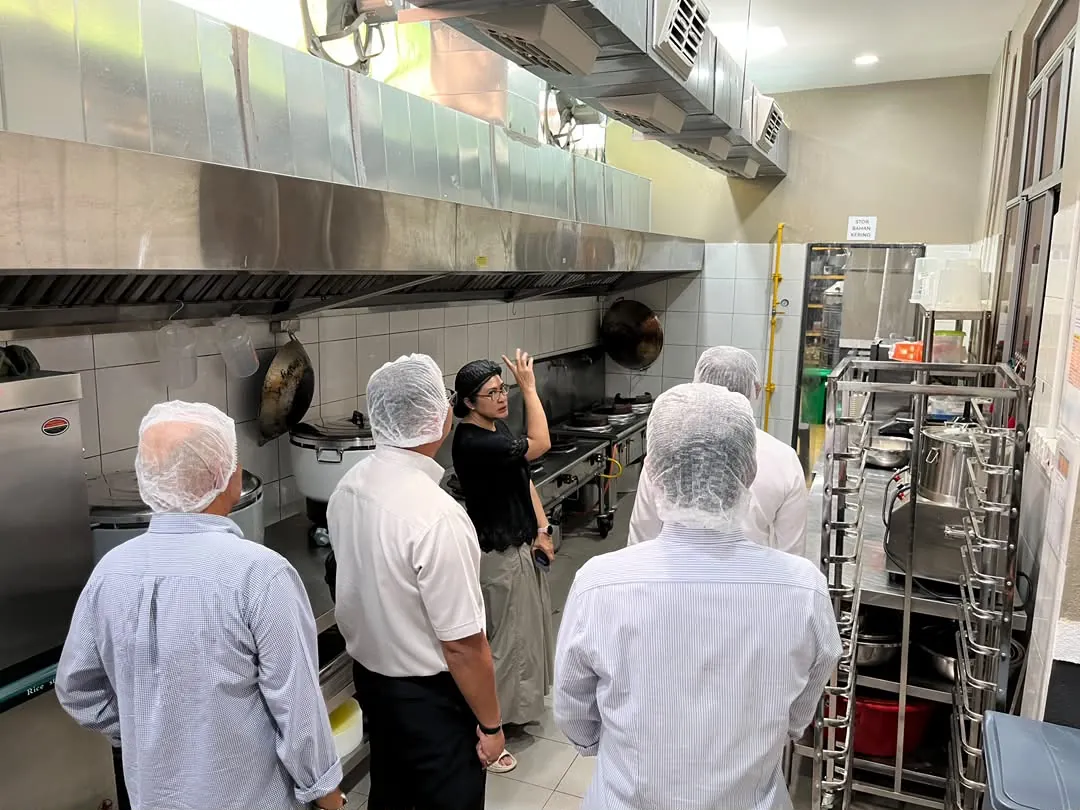
The cooking kitchen at DapoGo's Melaka Halal Hub factory, where pastes and dishes are cooked before they are filled into pouches.
A Malaysian co-packer can make a halal cooking paste under your label from its own formula (private label) or from your recipe. At DapoGo those start from RM1,500 and from RM3,500 per SKU, after a RM250 consultation, with a pilot of 300–500 pouches and full production from 1,000.
This guide is for founders who want a rendang, asam pedas or curry paste under their own name: a family recipe that already sells, a restaurant’s signature base, or a brand aimed at Malaysians abroad. For the wider route, start with DapoGo’s guide to halal OEM and co-packing in Malaysia. We write from our own retort kitchen at Melaka Halal Hub, Serkam, running since June 2026, and we sell our own range of pastes under the DapoGo name.
Key points
- Decide the pack before the recipe: a 1kg catering pouch and a retail pouch are different products.
- Shelf life comes from the process. Low-acid foods (pH above 4.6, water activity above 0.85) need a full heat process to keep without a fridge.
- Which Food Regulations standard a paste falls under, mixed spice or sauce, decides whether a nutrition panel and a date mark are compulsory; KKM makes that call.
- A co-packer’s halal certificate does not certify your product.
On this page9 sections
Private label or your own recipe: what does a paste co-packer offer?
Two routes, and the price gap between them is the recipe work. Private label puts an existing formula under your brand; a custom recipe means the factory first reproduces your paste and gets it through a heat process. DapoGo’s OEM brochure lists sambal and cooking pastes, plus kuah and gravy, among the products it makes for other brands, in stand-up or pillow aluminium retort pouches.
Settle the pack size early. A 1kg pouch is a catering format, made for restaurant and canteen kitchens. Our own Pes Rendang Minang is a 400gm aluminium pouch, a retail format. The private-label-or-own-recipe choice in full is in private label vs your own recipe.
What makes one cooking paste shelf-stable and another a chiller product?
The acidity, the water in the paste and the heat process, not the recipe name. The US FDA defines low-acid foods as those with a finished equilibrium pH greater than 4.6 and water activity greater than 0.85. Codex adds why that line matters: above pH 4.6, foods can support heat-resistant spore-formers such as Clostridium botulinum, so they need a full heat process to keep on a shelf.
A paste can instead be acidified: low-acid ingredients with acid added, reaching a finished equilibrium pH of 4.6 or below. The FDA’s acidified-foods rule excludes foods stored, distributed and retailed under refrigeration, which is the third route: a chilled paste.
That is why shelf-life figures differ from one factory and one product to the next. DapoGo states up to 24 months at room temperature for its own range; that is our claim about our own products, not a promise for your recipe. In Malaysia, if a date depends on storage, the label must also carry the storage direction; our asam pedas paste page, for example, says to keep it in the chiller after opening. How a shelf-life figure is proven is in retort food shelf-life testing; for condiments, see sambal co-packing: glass jar or retort pouch.
Paste or ready meal: which should your brand launch first?
Launch a paste if your buyers still cook, a ready meal if they want to eat without cooking. A paste is half the dish. On our Pes Asam Pedas Johor page, the buyer adds 200–300ml of water and their own fish, chicken or meat, and one 400gm pack is for 1kg of protein.
| Question | Cooking paste | Ready meal |
|---|---|---|
| What is in the pack | Spices and base; the buyer adds protein | The finished dish |
| Buyer’s work | Add water and protein, then cook | Heat and eat |
| DapoGo example | One 400gm pack for 1kg of protein | One pack, eaten as it is |
| Best for | Buyers who cook at home | Buyers who will not cook |
What does Malaysian law ask of a paste label?
Four things to know. First, required label words on food produced or packed in Malaysia must be in Bahasa Malaysia; English can be added as a translation. Second, the Food Regulations 1985 have no single standard for cooking paste. Regulation 333 says mixed spice includes curry powder and curry paste
, while sauce, under regulation 339, is a preparation intended to be eaten with food as a relish
.
Third, that classification has consequences. Regulation 18B makes a nutrition panel compulsory for listed standards, including regulations 339 to 358, but regulation 333 is not on the list; the Fifth Schedule’s date-marking list names sauce but not mixed spice. Regulation 333 also describes a mixture of spices with at least 0.5 per cent v/w of volatile essential oil, so a paste heavy with santan, onion or belacan may not fit it. Which standard applies is KKM’s call; its label review costs RM250.00 per application with a 15-day charter.
Fourth, belacan. Regulation 163 defines belacan as a fish product, and fish and fish product is one of the declared allergen groups, so a paste with belacan must say so. Our asam pedas paste page carries the line Mengandungi belacan (contains belacan). The full list is in packaged food labelling in Malaysia, and selling into Singapore or the UK is covered in exporting halal ready-to-eat food.
Is the factory’s halal certificate enough?
No. JAKIM’s 2020 halal certification manual requires a contract manufacturer to hold certification under its contract-manufacturing scheme before it may make products for other companies, and it says that scheme cannot be used as halal certification of the products made. Your paste needs its own application to carry the halal logo.
Ask any co-packer to show its certificate under the OEM scheme before you sign. The certificates around it, MeSTI included, are in MeSTI, halal and HACCP for a food brand.
What does it cost, and what is the minimum run?
At DapoGo a paste starts with a RM250 consultation, then from RM1,500 per SKU on our formula or from RM3,500 on your recipe, a pilot of 300–500 pouches and full runs from 1,000 pouches. The per-pouch price is set only after R&D and costing.
| Stage | Published price | Note |
|---|---|---|
| OEM consultation | RM250 per session | 45–60 min; deducted from the R&D fee if you proceed within 7 days |
| Private label (DapoGo formula) | from RM1,500 / SKU | Our existing paste recipes, your brand |
| Custom R&D sample (your recipe) | from RM3,500 / SKU | Your family or restaurant paste |
| Complex product development | from RM5,000 / SKU | New or more demanding products |
| Pilot batch | per product | 300–500 pouches / SKU |
| Full production | per product | from 1,000 pouches / SKU |
You pay a 70% deposit and 30% before delivery or stock release. Artwork, lab testing, nutrition facts, barcode and the halal application cost extra unless stated, and the R&D fee is non-refundable. The process runs from enquiry to full production (the DapoGo OEM process): consultation 1–2 days, sample and taste testing 2 weeks, production 1–2 months, with at most three recipe revisions per SKU. Cost factors are broken down in halal food OEM cost in Malaysia, and the service itself is on DapoGo’s OEM and co-packing services page.
Quick answers
Do cooking pastes need a nutrition label in Malaysia?
It depends on the standard. Regulation 18B makes a nutrition panel compulsory for listed standards, including sauces under regulations 339 to 358, but not regulation 333, which names curry paste. KKM decides which applies; its label review costs RM250.00 per application with a 15-day charter.
Can a co-packer make my restaurant’s paste?
Yes, through custom R&D. On DapoGo’s rate card that starts from RM3,500 per SKU, with at most three recipe revisions, a pilot of 300–500 pouches and full production from 1,000. Decide early whether you need a catering pack or a retail pack.
How long does a retort cooking paste last?
There is no single figure. Codex ties the heat process to the paste’s composition, water activity and container, so shelf life is proven product by product. Makers’ own claims differ from product to product; DapoGo states up to 24 months at room temperature for its own range.
Where to start
Start with one paste your customers already ask for, not a range. Other questions about DapoGo are answered in our FAQ. To ask about a paste under your own brand, WhatsApp +60 11-5501 3391.
Sources
- Ministry of Health Malaysia, Food Regulations 1985 (updated to August 2026): regulations 10, 11(5), 14(6), 18B, 163, 333, 339 and the Fifth Schedule
- Ministry of Health Malaysia, Semakan Label Makanan (label review)
- US eCFR, 21 CFR Part 113 (low-acid foods)
- US eCFR, 21 CFR Part 114 (acidified foods)
- Codex Alimentarius, Code of Hygienic Practice for Low and Acidified Low Acid Canned Foods (CAC/RCP 23-1979)
- JAKIM, Manual Prosedur Pensijilan Halal Malaysia (Domestik) 2020
Want this made for your brand?
WhatsApp 011-5501 3391