OEM & Co-packing
Halal OEM and Co-Packing in Malaysia: The Founder’s Guide
Co-packing means you hand your recipe or ingredients to a factory, and the factory cooks, packs and returns a shelf-ready product carrying your brand. DapoGo offers this service from our factory in the Melaka Halal Hub, using the same retort technology we use for our own 54-product catalogue. This guide explains the whole route — so you can judge whether it fits your business, even if you end up choosing a different factory.
What is the difference between OEM and co-packing?
The two terms overlap, and in Malaysian food-industry practice they usually mean the same arrangement. Strictly: co-packing is a factory packing (and usually cooking) a product to your recipe; OEM is broader — the factory produces the product end-to-end, sometimes developing the recipe with you, and your brand goes on it.
In both models the point is ownership: the recipe and the brand stay yours. The factory is the cook and the packer — not the owner of your product. Other terms you will meet along the way (white label, MOQ, ambient shelf life) are defined in our glossary.
When does co-packing make sense?
Three situations, most commonly. First: you have a recipe that already sells — at a stall, at markets, on social media — and demand has outgrown your kitchen. Second: you have a brand and an audience, but not the capital or licences to build a food factory. Third: you want to enter a market that demands a shelf-stable format — retail shelves, online sales, or export.
If your volumes are still tiny or the recipe is not yet settled, it may be too early — a factory’s minimum order quantity will weigh on you. We wrote the full decision guide in Start a food brand without owning a factory.
Why retort as the format?
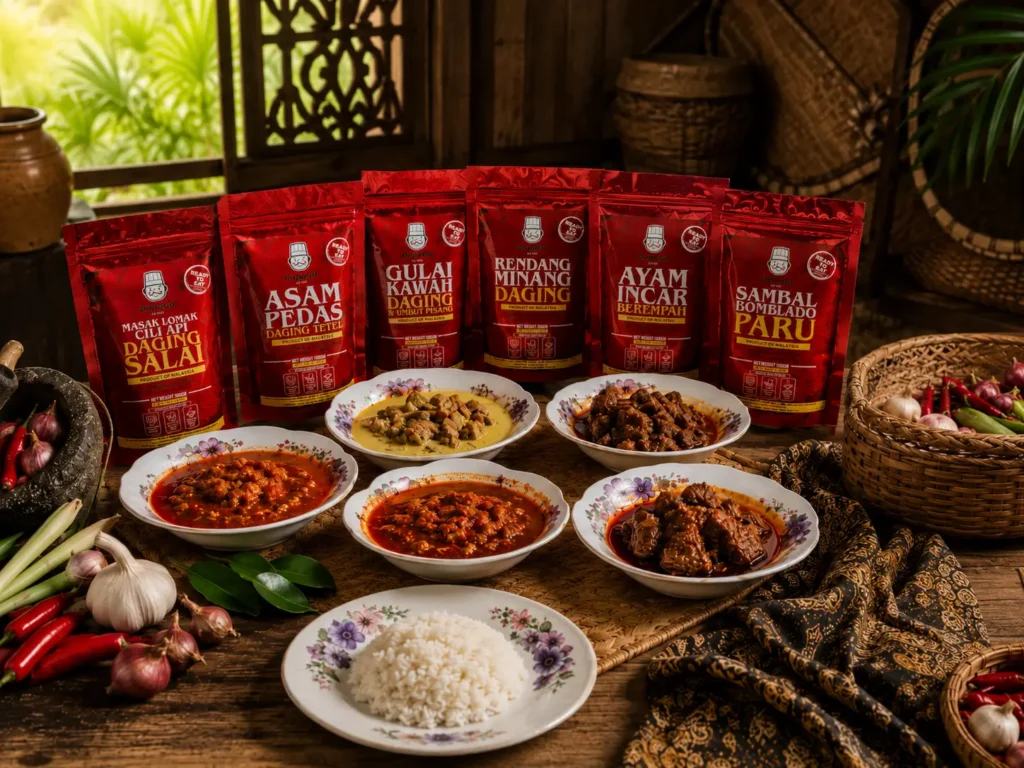
Format decides your market. Frozen products need an unbroken cold chain from factory to customer — a serious cost. Retort products keep at room temperature (our own products: up to 24 months under our published spec), so they can be sold online, shipped by ordinary courier, stocked on a normal shelf, and exported without refrigerated containers — the route our own range takes to Halal Street UK.
Retort is not the answer for every product — crispy foods and fresh salads do not suit it, and some textures change under high heat. The honest comparison is in Retort vs frozen vs vacuum packing, and the technical explanation in What is retort processing?
How does the process work with DapoGo?
Five steps: (1) consultation and recipe discussion, (2) sampling and taste tests, (3) agreement on specification and quantity, (4) production and retort packing at our factory, (5) delivery of finished product to you. Each step — including what you need to have ready at each stage — is laid out in The 5-step OEM process.
Our factory at Plot 31 & 32, Jalan EP Serkam 9, in the Melaka Halal Hub, has been running since June 2026 — it is the same facility that produces the entire DapoGo catalogue. You can judge our kitchen’s work directly by trying any of our own products before you talk to us.
What does it cost, and what is the MOQ?
The honest answer: it depends on your product. Cost is driven by ingredients, pack size, recipe complexity and quantity — there is no one price for everything. Your minimum order quantity and a cost range for your case come after the first consultation: full production starts at 1,000 pouches per SKU, and a cost range follows the first consultation, once your recipe and pack size are clear.
What we can tell you now is the structure of the cost — the four factors that set OEM pricing at any factory, and the questions worth asking before you sign anything. That is all in Halal food OEM in Malaysia: real costs, MOQs and lead times.
What about my product’s halal status?
The thing to understand: halal certification attaches to a specific product and premises — it is not inherited automatically by anything that leaves a halal factory. Our facility operates inside the Melaka Halal Hub, an industrial park dedicated to halal food production, and the certification path for your product is one of the first things we discuss in consultation, because the route depends on your ingredients and target market.
For a general understanding of how Malaysian halal certification is layered, Is ready-to-eat food halal? explains it from the buyer’s side — the same lens your future customers will use on your product.
Who is this service right for?
Given the co-packing model and the retort format, the best-fit profiles are: food sellers whose recipe already has a following (a stall, catering, online sales) and who want to step up to a packaged product; established brands adding a shelf-stable line without building a factory; and founders targeting export or retail shelves, where a cold chain is impractical. Gravy-based, coconut-rich, spiced products — the cooking retort handles best — start with an advantage.
Less suitable, and we will say so early: crispy products, fresh salads, and products whose identity depends on a texture that high heat would change. If your recipe falls in that category, we tell you at consultation — not after you have spent money.
Founders’ quick questions
My recipe is confidential. Is it safe?
Recipe confidentiality is the foundation of the co-packing business — your recipe remains yours. Confidentiality arrangements are discussed and agreed at the consultation stage, before any recipe details change hands.
Can I start with a small test batch?
Minimum quantities depend on the product — yes, a trial batch can go as low as 200 units, so you can test the market before committing to a full 1,000-pouch run. Mention that you want a market test in your enquiry so we can propose a sensible arrangement.
How long from first conversation to finished product?
The timeline is set by recipe complexity, sampling rounds and quantity — add the stages up — 1–2 days of consultation, around 2 weeks of sampling, 1–2 months of production — so roughly two to three months end to end. The stages, and what speeds them up, are laid out in the 5-step process.
Next step
If you have a recipe and want to know whether it suits retort, the fastest way is to ask. Send an enquiry through the form on our services page, or WhatsApp us directly at +60 11-5501 3391 — tell us the product, the volume you are aiming for, and where you want to sell it. You will get the right questions back, not a sales script.