OEM & Co-packing
Melaka State Leaders Visit DapoGo’s Factory at Melaka Halal Hub
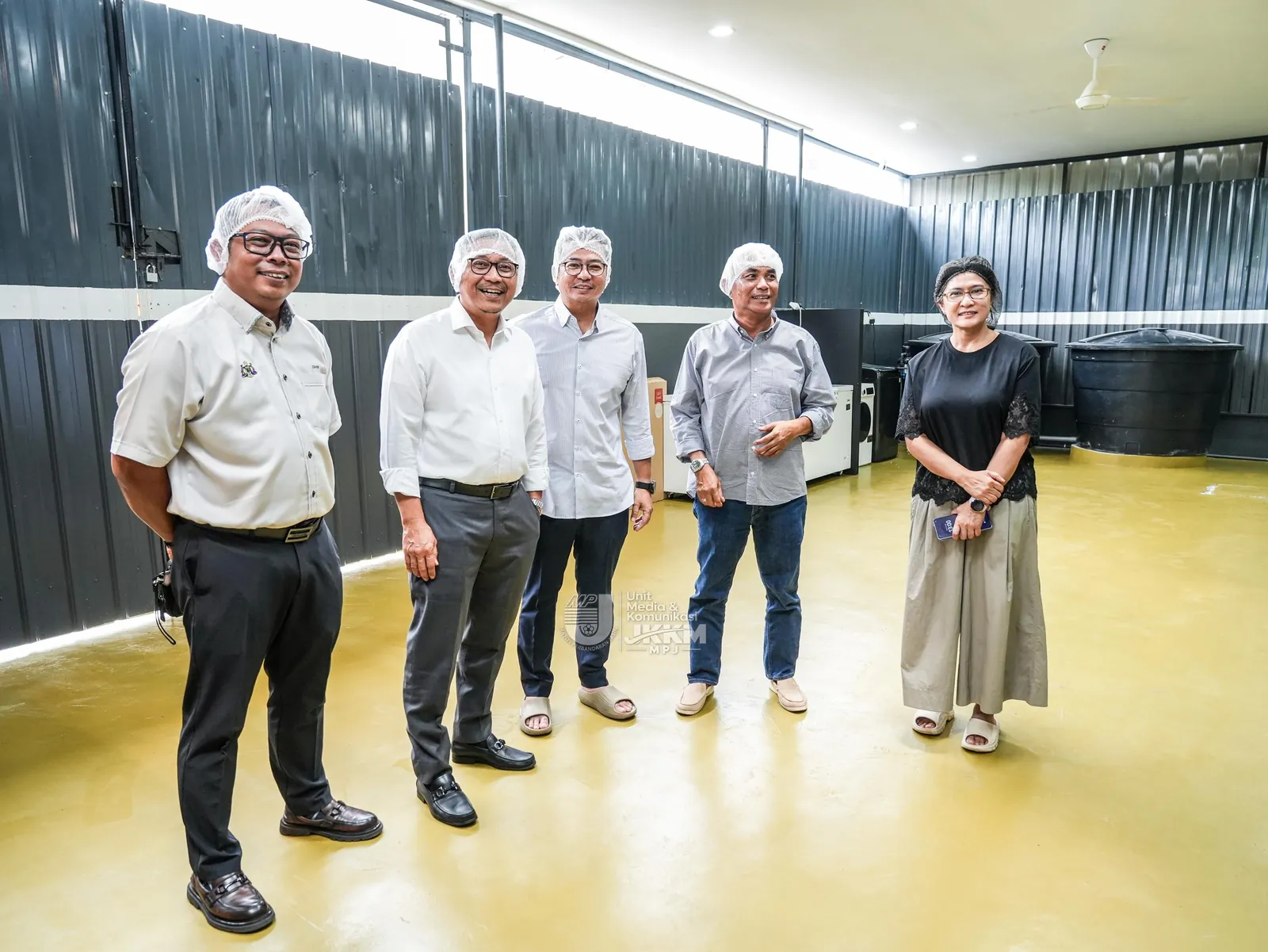
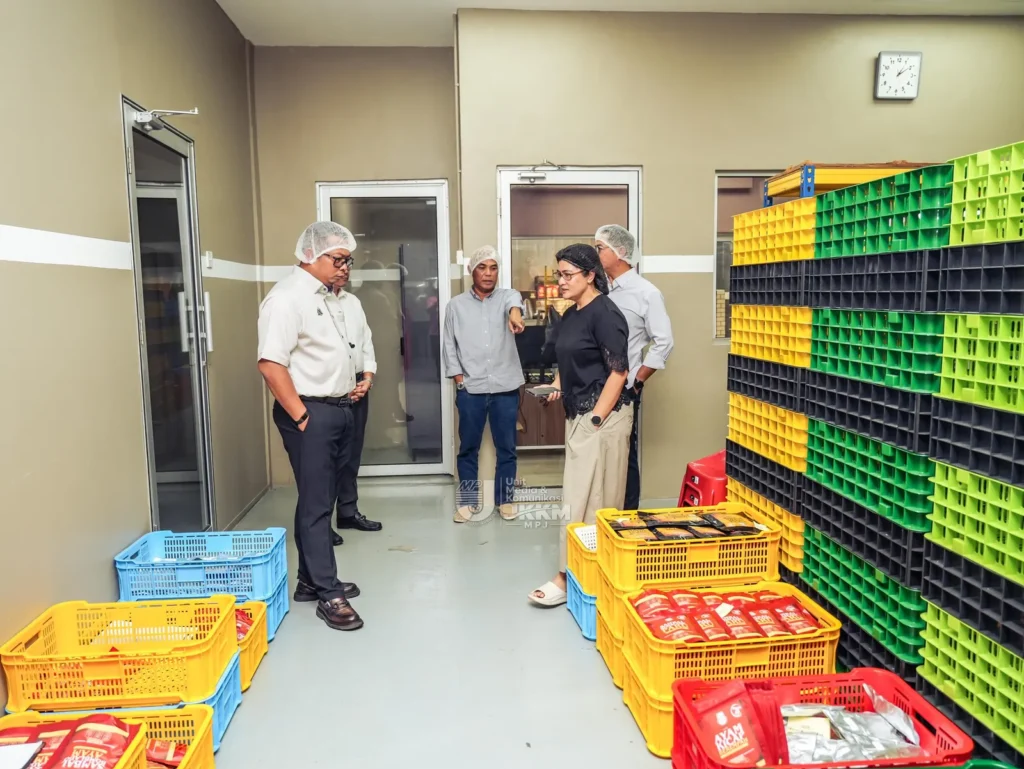
Datin Zamzarina Zambri (right) with the guests at the DapoGo factory, Melaka Halal Hub, 21 October 2026. Photo: Unit Media & Komunikasi MPJ.
On 21 October 2026, leaders from the Melaka state government visited the DapoGo factory at Melaka Halal Hub, Serkam. DapoGo’s founder, Datin Zamzarina Zambri, gave them a briefing on retort technology, then took them through every part of production: the cooking kitchen, the preparation room, the retort machine, the packing area and the finished-goods store. The visit ended with a meal in the factory’s dining area.
This factory has been DapoGo’s kitchen since June 2026. It is where DapoGo’s ready-to-eat dishes, sambal and rice meals are cooked and sealed, and where DapoGo makes products for other brands through its halal OEM and co-packing service. The photos below were shared by Datin Zamzarina after the visit and follow the guests’ route through the factory.
The short version
- On 21 October 2026, leaders from the Melaka state government visited the DapoGo factory at Melaka Halal Hub, Serkam.
- DapoGo’s founder, Datin Zamzarina Zambri, briefed them on retort technology: heat and pressure sterilise the food inside a sealed pouch.
- The tour took in the cooking kitchen, the preparation room, the retort machine, the packing area and the finished-goods store.
- The same factory makes DapoGo’s own range and, through its halal OEM and co-packing service, products for other brands.
On this page9 sections
What happened during the visit to the DapoGo factory?
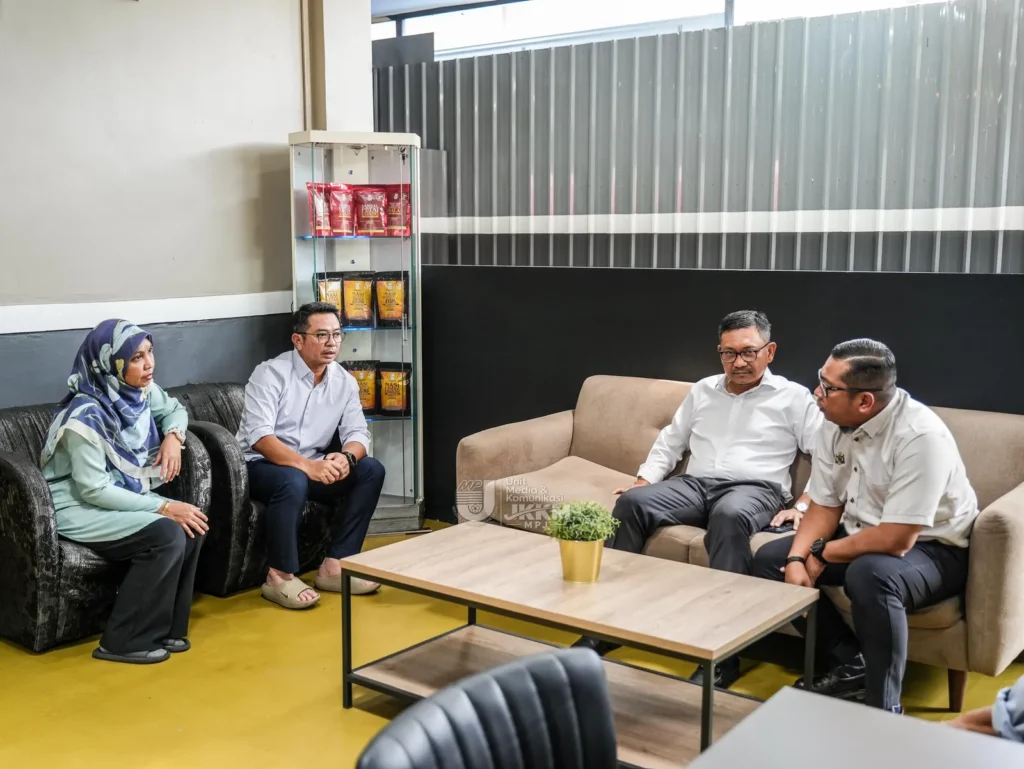
The guests were welcomed in the factory’s lounge, next to the shelves of DapoGo products, and talked with Datin Zamzarina and her team. After the briefing, every guest put on a hairnet before entering the production area. They walked through each room where DapoGo’s food is made: from the kitchen where the dishes are cooked, to the retort machine, to the store where finished products wait to be shipped.
What did the briefing explain about retort technology?
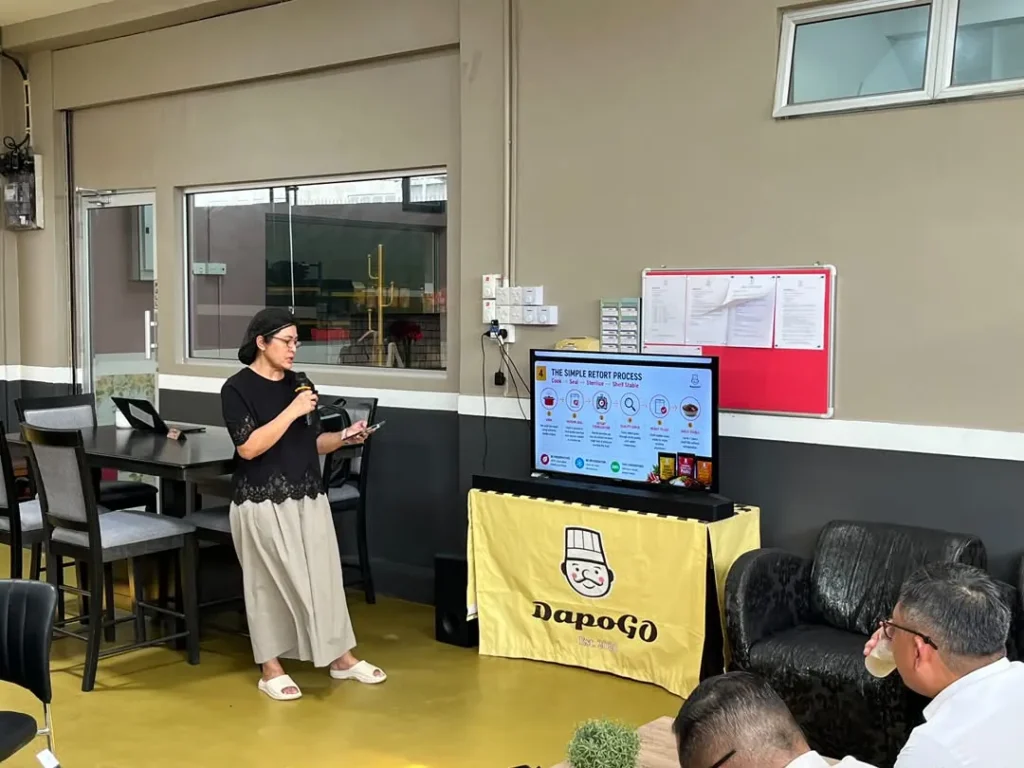
In the lounge, Datin Zamzarina gave a short briefing with slides on a screen. One slide asked “What is retort technology?” and answered it with an easy picture: think of it as a giant scientific pressure cooker. Heat and pressure together sterilise the food inside a sealed pouch, so it is safe to eat.
The next slide summed up DapoGo’s process in four words: cook, seal, sterilise, shelf stable. On screen it was broken into six steps:
- Cook: the dishes are cooked in the factory kitchen.
- Vacuum seal: the food is sealed inside its pouch.
- Retort sterilisation: heat and pressure sterilise the sealed pouch.
- Quality check: the pouches are checked and packed.
- Ready to eat: the food inside is safe to eat.
- Shelf stable: the pouches keep at room temperature.
DapoGo states that its products keep for up to 24 months without a fridge. The full explanation, from the pot to the sealed pouch, is in How DapoGo Works.
Where are DapoGo’s dishes cooked and prepared?
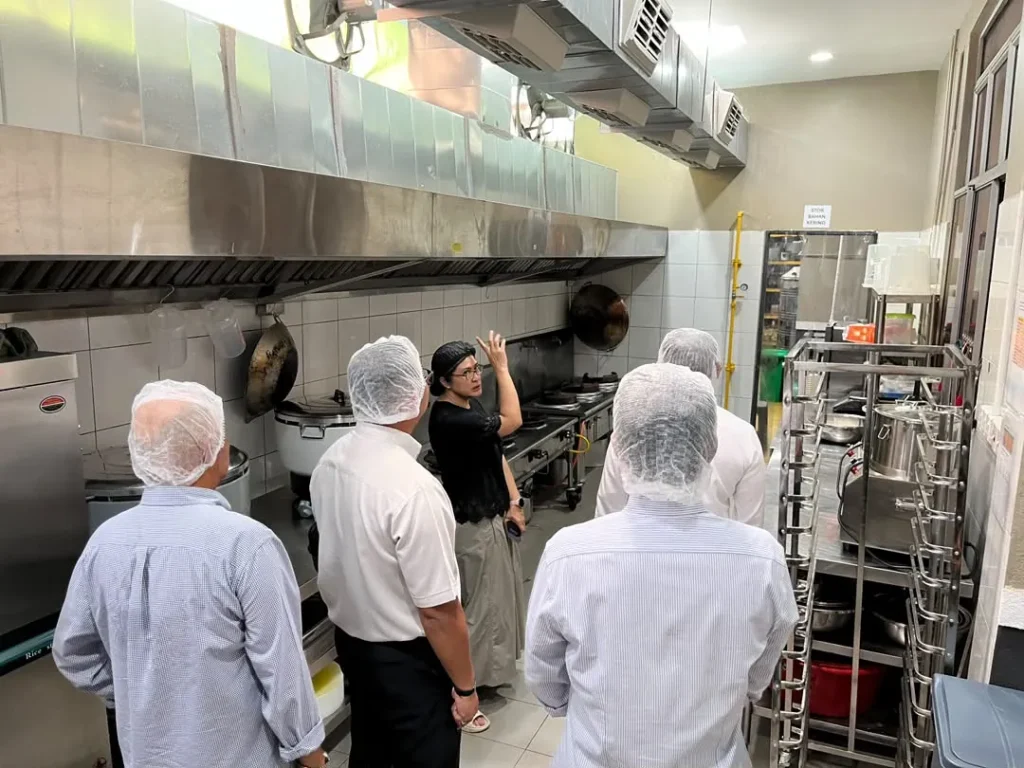
In the cooking kitchen, the guests saw a line of gas burners and large woks under a long extraction hood, big rice cookers and steel rack trolleys. This is where DapoGo’s family recipes are cooked in factory batches, and Datin Zamzarina walked the guests through the kitchen layout.
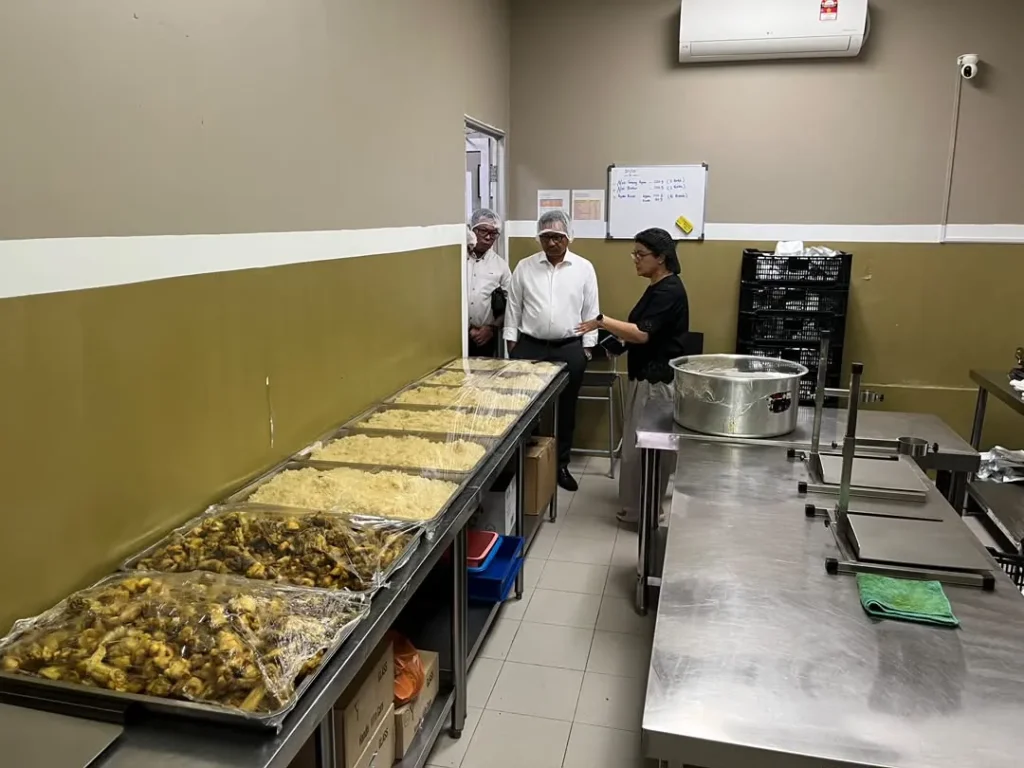
In the preparation room, cooked rice and dishes are laid out in covered steel trays before they go into pouches. Datin Zamzarina took the guests through this room herself.
How does the retort machine make the food last?
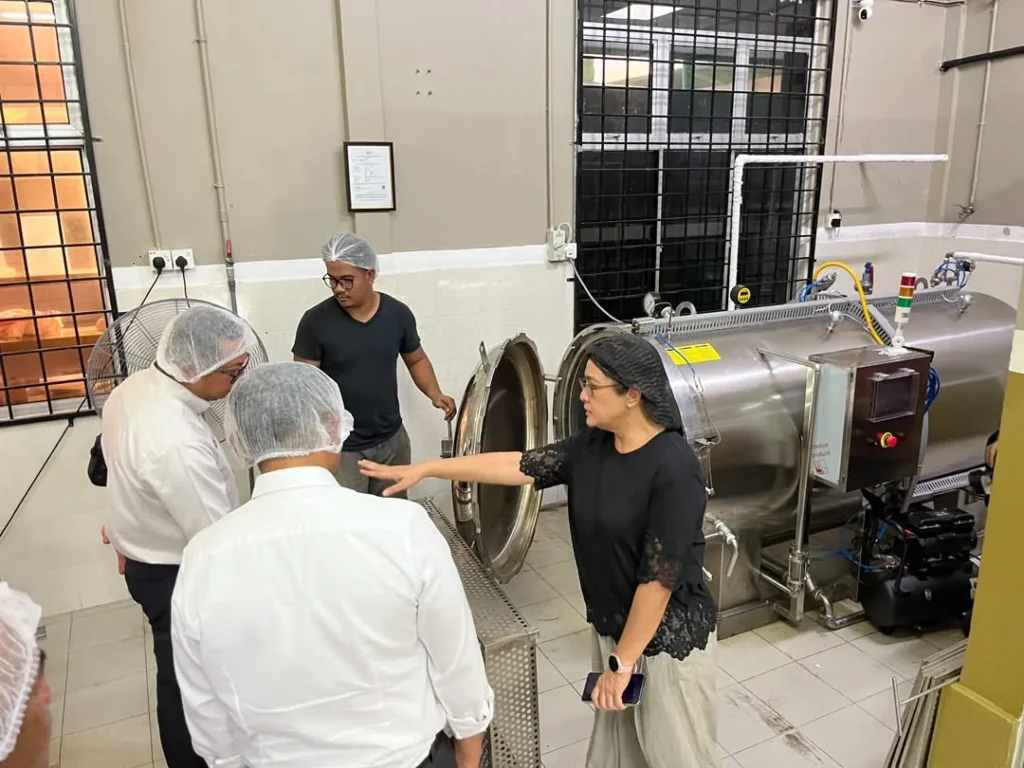
The retort machine is the heart of the DapoGo factory: a large stainless-steel chamber with a round door at the front. Sealed pouches are stacked in perforated steel baskets, rolled into the chamber and heated under pressure until the food inside is sterile. With the machine’s door open, Datin Zamzarina explained to the guests how it works.
After this process, the food does not need a fridge. That is why DapoGo pouches can go to the office, to a hostel, or along on a trip. For groups travelling abroad, our guide to halal food for Muslim group tours to Europe and Japan sets out which countries do not allow meat in luggage, and which DapoGo options suit those trips.
What happens to the pouches after the retort?
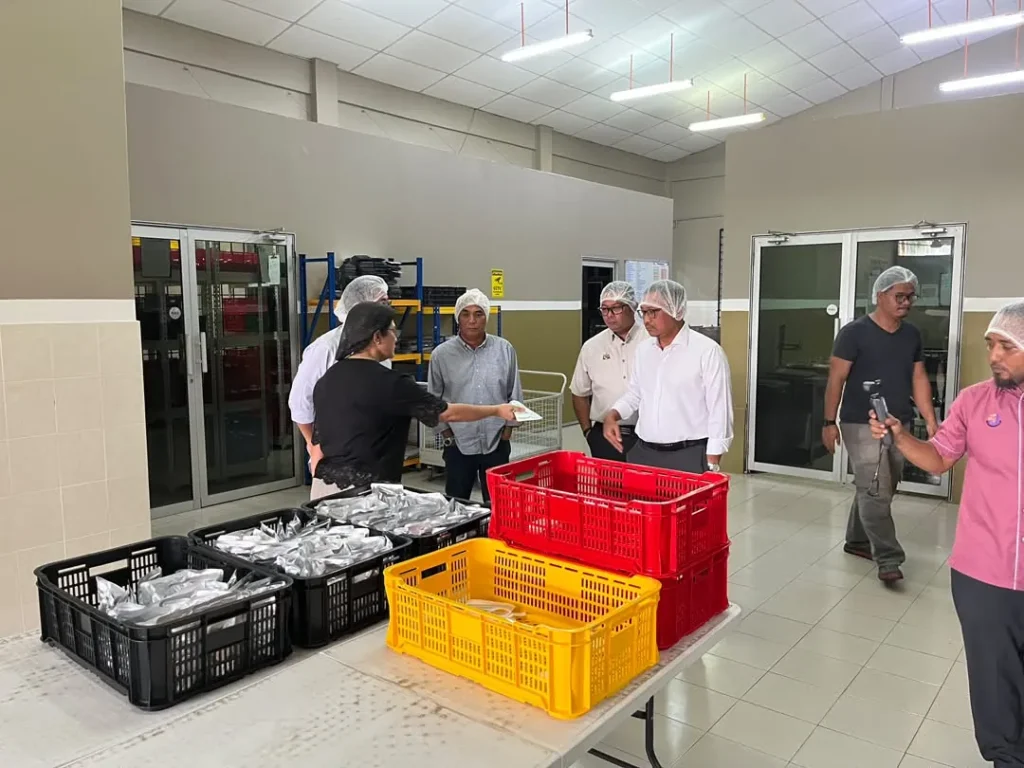
After the retort, pouches are gathered in crates in the packing area to be checked and packed, the quality-check step from the briefing slide. At the packing table, Datin Zamzarina showed the guests one of the pouches.
Finished products are kept in the store, sorted by product in coloured crates, before they are sent to customers. These dishes and sambal are sold on dapogo.com, Shopee, TikTok Shop, Lazada, DapoGo’s WhatsApp catalogue and Halal Street UK.
How did the visit end?
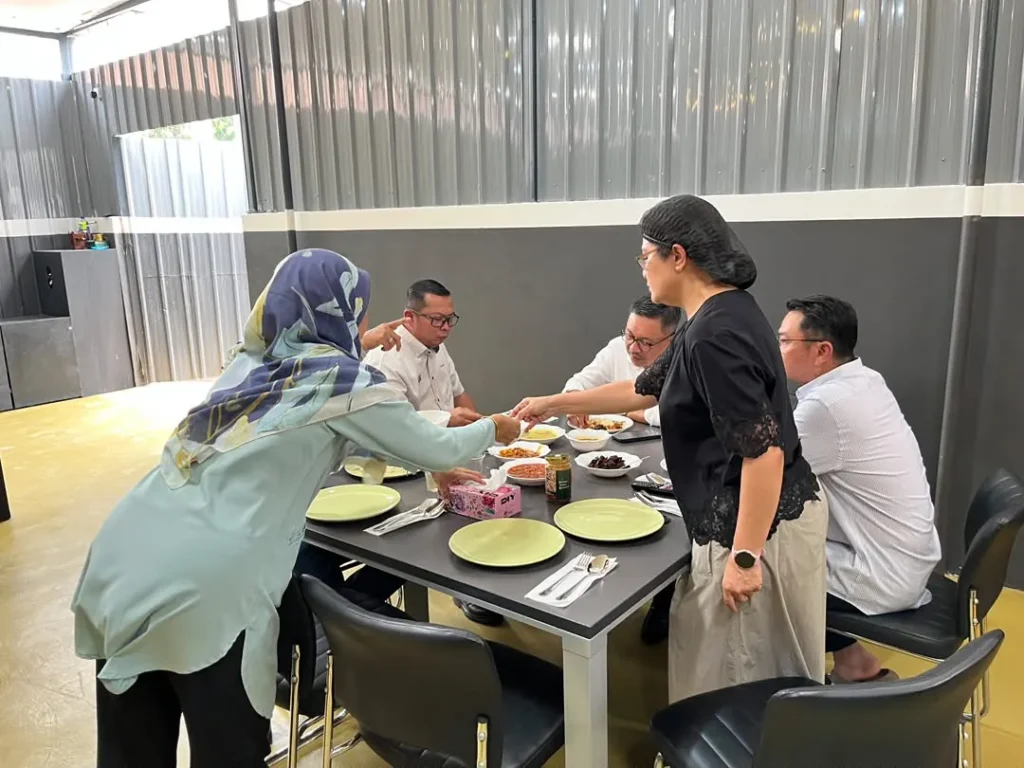
The visit ended with a simple meal in the factory’s dining area, with Datin Zamzarina and the DapoGo team. That evening, Datin Zamzarina wrote that the visit was a great honour for the whole team.
What did DapoGo’s founder say about the visit?
Datin Zamzarina wrote these words in Malay on the day. This is our English translation:
Who would have thought that our small factory, which began with recipes cooked by our own family, would today welcome important guests from the Melaka state leadership. It is a great honour for all of us at DapoGo.
We may still be small, with a lot left to learn and improve. But our dream is big!
DapoGo is not just about selling food. We want to take the taste of Malay heritage cooking further, open more job opportunities, support the local food industry and play our part in growing Melaka’s economy.
Thank you for taking the time to visit our humble factory at Melaka Halal Hub. May this visit open the way to more opportunities, partnerships and good progress for DapoGo.
From a small kitchen, we hold a big dream. From Melaka, God willing, to the world. Please pray that our journey is made easy.
Datin Zamzarina Zambri, founder of DapoGo, 21 October 2026.
FAQ: the Melaka state leaders’ visit to DapoGo
When did Melaka state leaders visit the DapoGo factory?
On 21 October 2026. DapoGo’s founder, Datin Zamzarina Zambri, briefed the guests on retort technology and took them through the factory at Melaka Halal Hub, Serkam.
Where is the DapoGo factory?
At Plot 31 & 32, Jalan EP Serkam 9, Melaka Halal Hub, 77300 Serkam, Melaka. It has been DapoGo’s kitchen since June 2026.
What is retort technology?
Datin Zamzarina’s briefing put it simply: think of it as a giant scientific pressure cooker. Heat and pressure sterilise the food inside a sealed pouch, so it is safe to eat and does not need a fridge. DapoGo states that its products keep for up to 24 months.
Can DapoGo make a product for my brand?
Yes. Through DapoGo’s halal OEM and co-packing service you can bring your own recipe or start from an existing DapoGo formula. A pilot batch has an MOQ of 300–500 pouches per SKU, and full production starts from 1,000 pouches per SKU. WhatsApp DapoGo on 011-5501 3391.
How did DapoGo start, and what does this factory make?
DapoGo started as a ready-to-eat food business in October 2020, under Studio One Creative, with family recipes at its heart. The company, DAPOGO FOOD INDUSTRIES SDN. BHD., was registered on 20 January 2025, and in June 2026 DapoGo moved into its own factory at Plot 31 & 32, Jalan EP Serkam 9, Melaka Halal Hub.
The factory makes DapoGo’s own range: side dishes, rice meals, sambal and cooking pastes. The same kitchen also takes on work for other brands. Through DapoGo’s OEM and co-packing service, a founder can bring their own recipe, or start from an existing DapoGo formula, and turn it into a retort product under their own label. The route, from consultation and samples to a pilot batch and full production, is laid out in the OEM process, step by step.
If you run a food brand, a shop or a travel agency and would like to talk about DapoGo’s products or an OEM partnership, reach us directly: WhatsApp DapoGo on 011-5501 3391.
Want this made for your brand?
WhatsApp 011-5501 3391