
Dish Guides
Gulai, Curry or Masak Lemak? Malaysian Gravies Explained
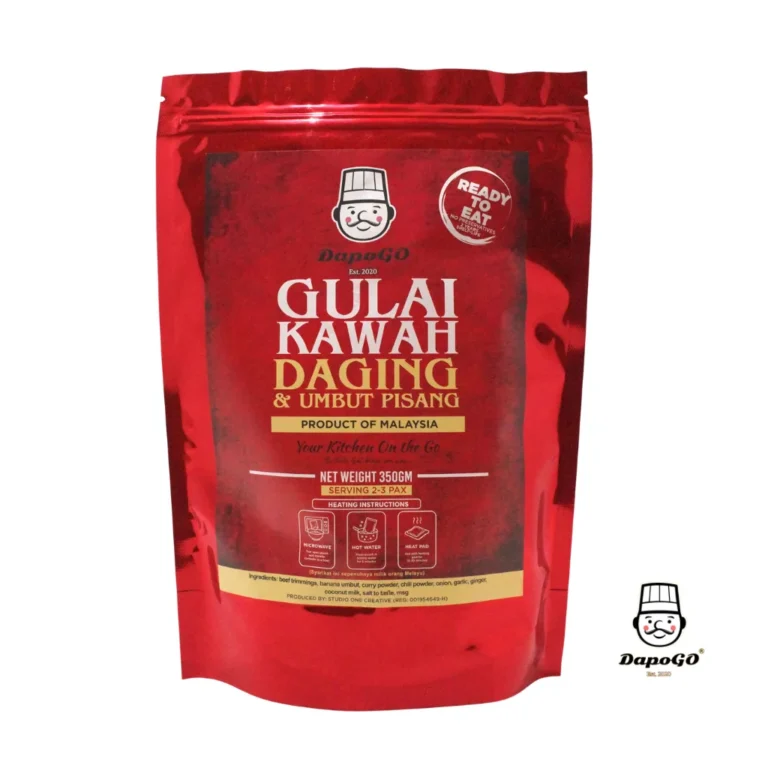
DapoGo Gulai Kawah Daging & Umbut Pisang, 350g retort pouch
Gulai is not a dish. It is the family word for any Malay dish with gravy. Kari — curry — is a gulai cooked with rempah, the dry aromatic spices. Masak lemak is a gulai made with coconut milk and no rempah at all. So the thing that separates them is not the coconut milk. It is the spice.
English puts every Malaysian gravy in one box marked curry, and the box is the wrong shape. This page is part of the DapoGo dish guide, written from our own retort kitchen at the Melaka Halal Hub in Melaka. The clearest answer to the question turns out to live in a dictionary, not a recipe.
The short version
- In Malay, a curry is a kind of gulai — not the other way round.
- Kamus Dewan defines kari as a gulai cooked with rempah.
- Kamus Pelajar defines gulai lemak as a gulai with coconut milk and no rempah.
- The kitchen test: a gulai or a curry starts with a tumis. A masak lemak does not.
- Kawah is a pot, not a flavour, so gulai kawah means gulai cooked for a crowd.
On this page10 sections
Is gulai just the Malay word for curry?
No, and the Malay dictionary is blunt about which way round it goes. Kamus Dewan Edisi Keempat, published by Malaysia’s national language authority, defines kari as “gulai daging, ikan, dll yg dimasak dgn rempah” — a gulai of meat, fish and so on cooked with rempah. Kamus Pelajar shortens it to two words: “gulai berempah”, a spiced gulai.
Gulai itself is defined far more widely, as “masakan (daging, ikan, dll) yg berkuah” — a dish of meat, fish and so on that has gravy. Anything with a gravy. Curry is one branch of that family, and it is the branch English happens to have a word for.
| Gravy | Rempah | What carries the flavour | Closest English description |
|---|---|---|---|
| Gulai | Usually | Fried spice paste plus coconut milk | The family word, not a dish |
| Kari | Yes, at its strongest | Spice blends and whole spices | Curry |
| Masak lemak | None | Coconut milk, turmeric, bird’s eye chilli | No English equivalent |
| Asam pedas | Yes | Chilli and sour tamarind, no coconut milk | A sour, coconut-free gravy |
| Rendang | Yes | Spices, coconut milk, kerisik | Cooked dry, almost no gravy |
If they all use coconut milk, what actually separates them?
Rempah, and the word has a narrow meaning. Kamus Dewan defines it as “bahan perisa makanan yg terdiri drpd kulit kayu manis, cengkih, buah pelaga, jintan manis, dll”: cinnamon bark, cloves, cardamom, fennel and so on. Chilli is not rempah. Turmeric is not rempah. That is how a masak lemak can be hot enough to make you sweat and still count, in Malay, as a gravy with no rempah in it.
There is a quicker test you can run in any kitchen: is there a tumis? A gulai or a curry begins by frying the spices in oil until the aroma comes up. Utusan Malaysia’s gulai kawah recipe opens exactly that way — “Panaskan minyak dalam kawah atau periuk. Tumis bunga lawang, biji buah pelaga, bunga cengkih dan serai”, heat the oil, fry the star anise, cardamom, cloves and lemongrass. A masak lemak skips the step entirely. The Malay recipe site Rasa puts it plainly: “Tak perlu minyak atau tumisan” — no oil, no frying.
What is masak lemak cili api, and where is it from?
Negeri Sembilan, the state just south of Kuala Lumpur. Malaysia’s national culture department records the dish in its heritage database, and its own entry calls it “Gulai Lemak Chili Api”, using the word gulai and the local spelling masak lomak lado api.
The department writes that “This dish is a symbol of Negeri Sembilan’s traditional Malay cuisine, emerging from the influence of Minangkabau”, the people who settled the state after migrating from West Sumatra in the 14th century.
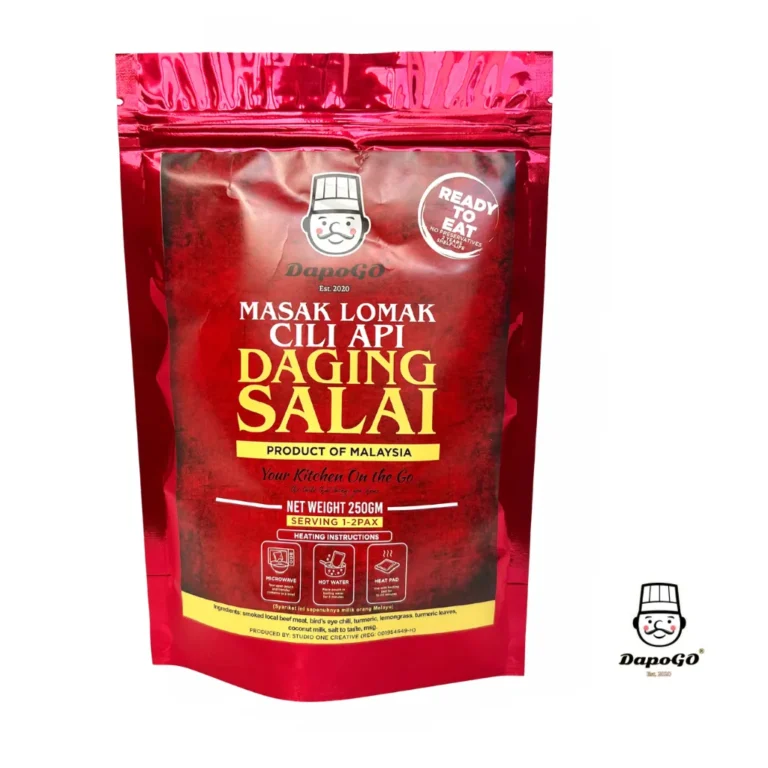
Its official ingredient list is the definition in practice: coconut milk, hot chillies, turmeric, lemongrass and turmeric leaves. No spice blend anywhere in it. The department also lists what goes into the gravy — “fish, snails, chicken, vegetables, and smoked meat” — which is why the dish is a method rather than a single recipe. Our Daging Salai Masak Lomak Cili Api, 250g takes the smoked-meat version, with the lomak spelling the state uses; our Daging Rebung Masak Lemak Cili Api, 300g is the bamboo-shoot pouch.
What makes gulai kawah different from any other gulai?
The pot. Kamus Dewan defines kawah as “sj kuali besar, kancah” — a kind of large wok — and Kamus Pelajar as the big wok you cook rice and the like in. Gulai kawah is simply gulai cooked at crowd scale, which is why Malaysians meet it at a kenduri, the communal feast, rather than at a weeknight dinner.
Utusan places it there too: this is the dish that draws guests at kenduri and Hari Raya gatherings.
Scale changes the taste. A gravy cooked for a whole kenduri is cooked long, reduced thick and built heavy on spice: the same recipe calls for “2 sudu besar rempah gulai kawah atau kari”, two tablespoons of gulai kawah or meat-curry spice blend, on top of whole spices already fried in oil. Our Gulai Kawah Daging & Umbut Pisang, 350g keeps the banana-stem heart that usually disappears when this dish is made small.
Which gravy should you try first?
- If you like heat and a clean, fragrant gravy — masak lemak cili api. Plain rice, a boiled vegetable, nothing else needed.
- If you want the heavy, celebratory one — gulai kawah.
- If you want sour and hot with no coconut milk — our Johor-style asam pedas pouch; the regional split is in our asam pedas guide.
- If you want dry, dark and sweet-spiced — rendang, explained in the rendang guide.
- If you would rather cook it yourself — the 400g cooking pastes, including Pes Rendang Minang and Pes Asam Pedas Johor.
If what you actually want is a relish rather than a gravy, that is a different family again: see the Malaysian sambal guide.
What changes when the gravy is already cooked in a pouch?
The time, not the recipe. These gravies are cooked at our factory at the Melaka Halal Hub in Serkam, Melaka, then sterilised inside the sealed pouch: the retort process. DapoGo states that its products keep for up to 24 months at room temperature and are ready in 3 to 5 minutes.
What does not change is the family. A pouch of masak lemak still has no rempah in it; a pouch of gulai kawah is still heavy with spice. The pouch moves the hours of cooking from your kitchen to ours, which matters most for the gravies nobody makes in small quantities.
Why does the price of chilli show up in a gravy?
Because chilli, the base of a masak lemak and an asam pedas, is only 35.8 per cent home-grown. That figure is its self-sufficiency ratio in the Department of Statistics Malaysia supply and utilisation accounts, and it is the lowest of the vegetables the department lists. Shallot, which it counts under other crops, came in at 0.01 per cent.
For scale, 24 of the 60 commodities in the same report cleared 100 per cent. The department’s own summary of the release is that domestic production has strengthened while import dependency remains significant, which is why a chilli price moves for the home cook and the factory on the same day.
Quick answers
Is masak lemak the same as gulai lemak?
Yes. Kamus Pelajar lists gulai lemak as a gulai with coconut milk and no rempah, and Malaysia’s culture department records the Negeri Sembilan dish as Gulai Lemak Chili Api, also known as masak lomak lado api. Two names, one gravy.
Which is hotter, a curry or a masak lemak cili api?
Usually the masak lemak. Heat comes from chilli, not from rempah, and masak lemak cili api is built on bird’s eye chillies with no spice blend to soften them.
Why does my coconut milk split?
Usually the heat is too high or the gravy was left unstirred. The culture department’s own method for masak lemak cili api says it directly: stir slowly so the coconut milk does not split.
Where to start
Pick the gravy you already know you like, then try one from a different branch of the family. That contrast teaches the difference faster than any description. Everything we cook is listed in the DapoGo dish guide, and other questions are answered in the FAQ. WhatsApp 011-5501 3391.
Sources
- Dewan Bahasa dan Pustaka, PRPM: gulai (Kamus Dewan Edisi Keempat, Kamus Pelajar Edisi Kedua)
- Dewan Bahasa dan Pustaka, PRPM: kari
- JKKN Arts and Culture Information Gateway: Masak Lemak Cili Api Ikan Keli Salai
- Utusan Malaysia: Gulai kawah daging pekat memikat
- Department of Statistics Malaysia: Supply and Utilization Accounts, Selected Agricultural Commodities
Want to try DapoGo?
WhatsApp 011-5501 3391