
Dish Guides
The DapoGo Dish Guide: Sambal, Rendang and Rice Sets by Taste
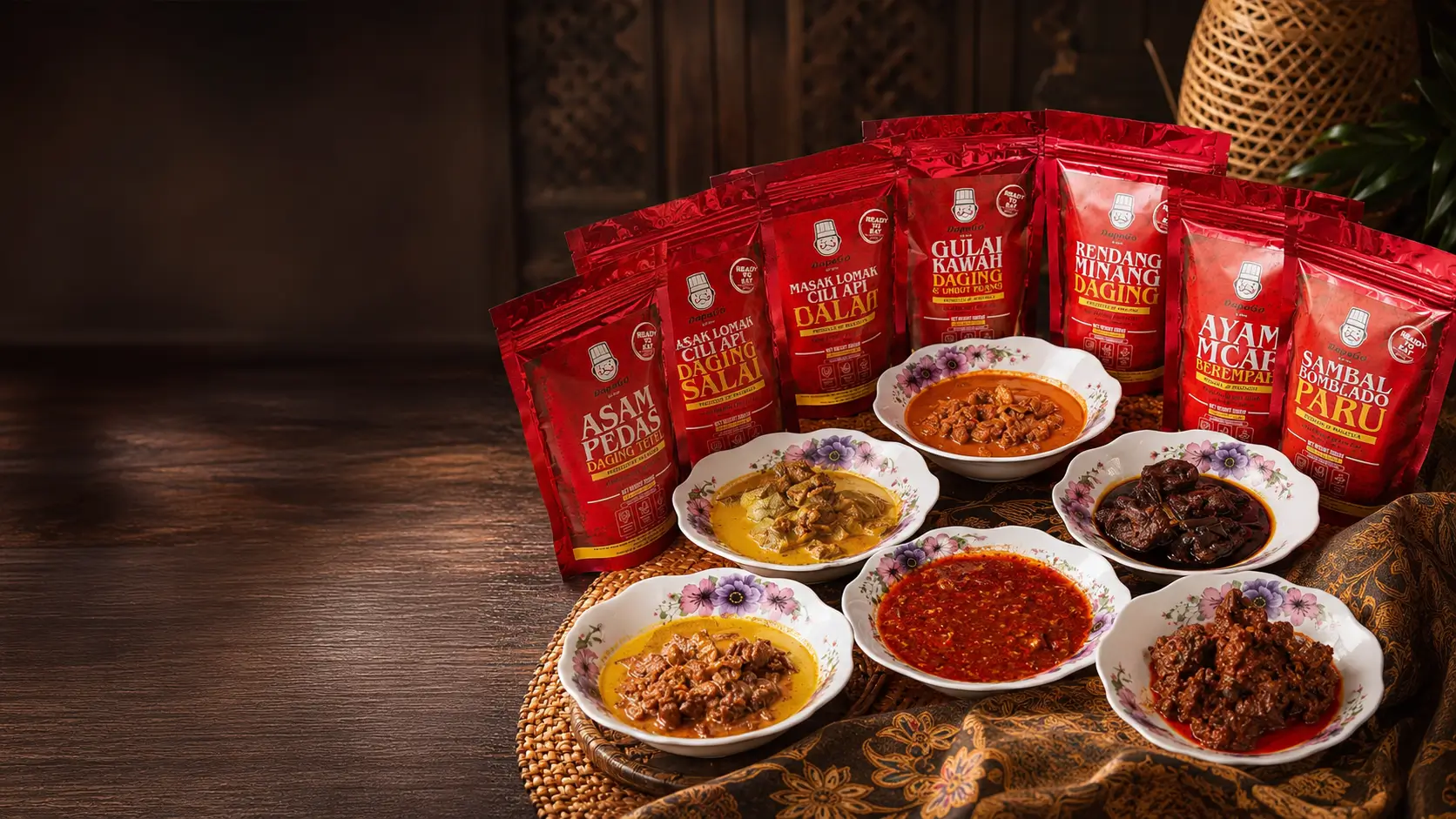
Our catalogue holds 54 products across 7 categories — from old-school anchovy sambal to Batu Pahat mutton briyani. If you did not grow up with these dishes, or you are ordering from abroad through Halal Street UK, the names alone will not tell you much. This guide organises everything by taste, heat level and use, so you know which pouch suits whom.
On this page8 sections
What is actually in the DapoGo catalogue?
Seven categories, seven different jobs:
| Category | No. | What it is for |
|---|---|---|
| RTE Set Lauk-Pauk (dishes) | 19 | Complete cooked dishes — heat and serve with rice |
| RTE Set Nasi-Nasi (rice sets) | 11 | Complete rice meals — briyani, nasi lemak, fried rice |
| RTE Sambal | 5 | Ready-to-eat chilli relishes that go with everything |
| RTC Cooking Paste | 6 | Cooking pastes — you stir-fry with your own protein |
| RTC Instant Ingredients | 4 | Ground basics — ginger, shallots, garlic, dried chilli |
| Promo | 7 | Value combos of rice + dishes |
| Add-On (Heat Pad/Box) | 2 | Flameless, powerless pouch heaters |
RTE means ready to eat — just heat. RTC means ready to cook — for when you want to cook, but faster. Every term is defined in our glossary.
The sambal family: which one is for you?
Sambal is Malaysia’s signature chilli relish, and it comes in distinct styles. Sambal Tumis Bilis Oldskool (330g, RM18) is the classic slow-fried style with anchovies — balanced sweet-heat, the one to start with. Sambal Lenyek (200g, RM18) is coarser, pounded-style. Sambal Tempoyak (330g, RM22) brings fermented durian and bird’s-eye chilli — tangy and fiery, a distinctly Malaysian taste. Sambal Kicap Johor (200g, RM14) is the mild, soy-based southern style.
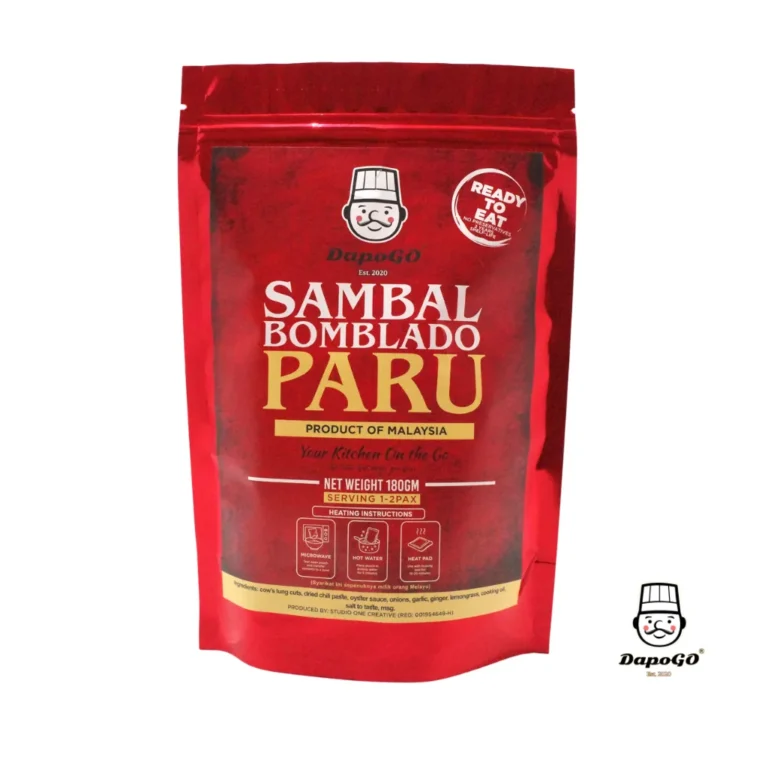
Then there are the sambals with protein in the dish category — stink bean and prawn, petai with anchovies, and the Bomblado series. The full breakdown, with heat levels, is in the sambal guide.
The slow-cooked dishes: rendang, asam pedas, gulai
This is the “village cooking” heart of the range. Beef Rendang Minang (200g, RM15) and its chicken version (RM13) are the safest introduction — slow-cooked in coconut and spices, the dish most non-Malaysians already know. Johor-style Asam Pedas (300g, RM14) is a hot-and-sour braise, and Gulai Kawah with banana stem (350g, RM17) is festival cooking you rarely find in a pouch.
For milder palates there is the kicap berempah (spiced soy) line — chicken, beef, squid, grilled mutton. Dishes run RM12 to RM27 a pouch, and each is a complete dish that heats in 3–5 minutes.
Rice sets: a full meal in one pouch
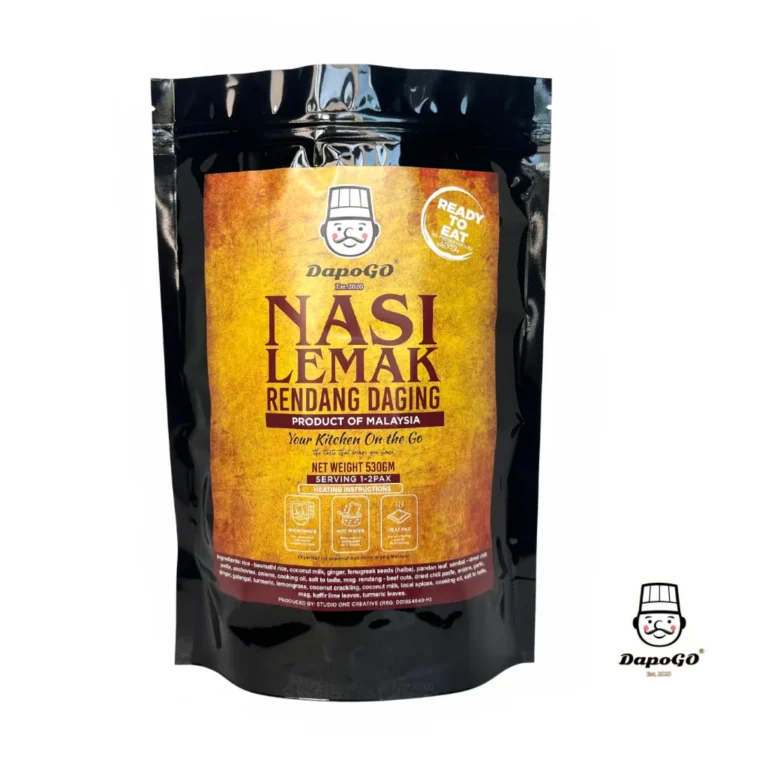
Eleven rice options, from plain basmathi rice (220g, RM5) to complete meals like Nasi Lemak with Beef Rendang (530g, RM19). The Batu Pahat briyani series — chicken (RM18), beef (RM20), mutton (RM25) — is the one customers pack for travel most often.
If you are sceptical about rice texture from a pouch — a fair question — we answer it honestly, set by set, in Rice meals in a pouch: how they hold up.
RTC pastes: for people who still want to cook
Six cooking pastes for fresh cooking without the spice-pounding: Asam Pedas Johor paste, Rendang Minang paste, two chilli sambal bases, spiced soy paste, and kacang pool. One 400g pouch covers several cooking sessions — fry the paste, add your chicken, beef or seafood, done.
The instant-ingredients line (ground ginger, shallots, garlic, dried chilli) covers the prep work while leaving the recipe yours.
How do you read the heat levels?
Our own product names carry the clues. The words cili api (bird’s-eye chilli) in a name — Sambal Tempoyak Bilis Cili Api, Daging Salai Masak Lomak Cili Api — mean genuinely hot. Sambal tumis and the Bomblado series sit in the middle: warm, but friendly to most palates. The kicap berempah (spiced soy) line — chicken, beef, squid, mutton — plus Kuah Kacang Nenek (peanut gravy) and Black Pepper Gravy are the safest picks for children or guests who do not do chilli.
A practical trick for mixed-tolerance households: build the meal on a mild dish, and put one sambal pouch on the table — everyone adds their own heat.
How many people does one pouch feed?
The size in each product name is the net food weight. As a rule of thumb: a 180–250g dish pouch is one serving for one person; a 300–350g pouch like the gulai kawah or asam pedas stretches to two if there are other dishes on the table; and a 440–530g rice set is one filling complete meal. The combos are already portioned — Kombo Set A, for instance, gives 4 rice pouches + 3 dishes, which works as a week’s stock for one person or a family weekend.
Planning guidance, not a hard measure — appetites differ.
Not sure where to start?
- First order: take a combo. Kombo Set A (RM54) gives 4 rice pouches + 3 dishes — enough to judge the range.
- Chilli lover: the 3-sambal combo (RM45).
- Travelling: a briyani set plus a heat pad — see when RTE meals earn their place.
- Home cook: any RTC paste plus the ground basics.
How these pouches are made — and why they keep for up to 24 months under our published spec — is explained in How DapoGo works. Other questions? The FAQ has short answers, or WhatsApp us at +60 11-5501 3391.
Want to try DapoGo?
WhatsApp 011-5501 3391