Meals On the Go
Halal Meal Plan for a Muslim Group Tour in Japan
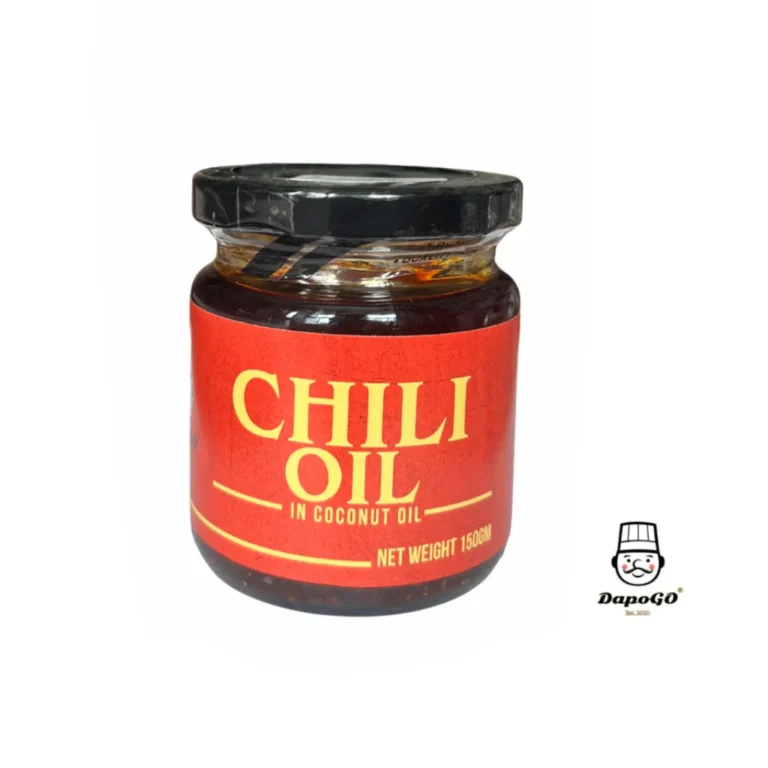
Chili Oil: dried chilli and dried shrimp in oil, with no livestock meat or egg in its ingredient list.
Plan a Muslim group’s Japan meals slot by slot. Malaysia Airlines says every meal on board meets halal standards; on JAL and ANA, order each passenger a Muslim meal (MOML) in time. Book city dinners from a halal certifier’s list, because Japan has no central halal authority. Japan bars even cooked meat, so fill rural lunches and late arrivals with seafood pouches from home, after checking squid and shrimp with Japanese quarantine.
This guide is for tour operators and group organisers taking Muslim travellers to Tokyo, Osaka, Kyoto or Hokkaido. DapoGo cooks ready-to-eat dishes in its own factory at Melaka Halal Hub, Malaysia, and this page is part of our guide to when ready-to-eat meals make sense. We cover the import rules in detail in halal food for Muslim group tours to Europe, the UK and Japan. Here is the full plan, like our Europe meal plan.
Key points
- JAL’s Muslim meal is halal-certified on flights from Japan; order it at least 25 hours ahead on the JAL website.
- Japan scores 59 out of 100 for halal dining in GMTI 2026; Malaysia scores 100.
- Most of Japan’s Muslim-friendly hotel services sit in the big cities, says JNTO.
- Packed food: no meat or egg products. Fish products without livestock meat or eggs fall outside animal quarantine.
On this page8 sections
Do Malaysia Airlines, JAL and ANA serve halal meals to Japan?
On JAL and ANA, a passenger gets a Muslim meal only if one is ordered. Malaysia Airlines states that every meal served on board is prepared in full compliance with halal standards, so a group on its flights needs no separate halal order.
| Airline | What the airline says | Ordering deadline |
|---|---|---|
| Malaysia Airlines | Every meal prepared in full compliance with halal standards | Not needed for halal; at least 24 hours ahead only for other dietary meals |
| Japan Airlines (JAL) | Muslim meal follows IATA guidelines; halal-certified by the Japan Islamic Trust on all international flights from Japan | At least 25 hours (JAL website) or 24 hours (contact JAL) |
| ANA | Muslim meal contains no pork products, gelatin, alcohol, alcohol-based flavouring or seafood from species without scales or fins | By 5 days before (ANA message service) or 24 hours before (ANA website); agency-bought tickets via the agency |
The Japan Islamic Trust certificate is stated for flights from Japan. For the outbound leg, ask JAL who prepares the Muslim meal before you promise it to the group. JAL also says special meals may not be available on codeshare flights run by another carrier. ANA’s website only takes requests for ANA-operated flights, and a request cannot be changed or cancelled within 24 hours of departure. Where tickets were bought through a travel agency, ANA asks for the request to come through that agency, so send the passenger list and meal codes as soon as tickets are issued.
How do you know a restaurant in Japan is halal?
Ask who certified it, then check that certifier’s own list. JNTO, Japan’s national tourism body, says “there is no central agency for halal accreditation”. Several bodies certify instead, so a sign on the door tells you little. Holiday GoGoGo, a Malaysian agency, notes that Muslim-friendly often means no pork and no alcohol, without full certification. A five-step check before the menu is locked:
- Get the certifier’s name in writing. Halal Navi’s Tokyo itinerary, for example, marks restaurants that are on the Japan Halal Foundation’s certified list.
- Confirm the current status with the venue directly. Halal Navi warns that policies change.
- Ask whether the kitchen is separate. JNTO notes that food at a restaurant calling itself halal-friendly may not be prepared in a separate halal-only kitchen.
- Ask about alcohol on the premises. JNTO says alcohol is served in the majority of Japanese restaurants.
- Ask about the seasonings. Cooking sake, mirin and soy sauce form the basis of many Japanese seasonings such as mentsuyu, JNTO says, and some miso contains alcohol unless it is additive-free and labelled mu-ten-ka.
Where does halal food run out on a Japan route?
Halal food runs short outside Japan’s big cities. Holiday GoGoGo says Tokyo, Osaka, Kyoto and Kobe are manageable with a little planning, while rural Hokkaido, Tohoku and the mountain towns are genuinely difficult without prior arrangements. JNTO says Muslim-friendly hotel services and facilities are mostly in major cities. For national context, the Global Muslim Travel Index (GMTI) 2026 from Mastercard-CrescentRating scores halal dining like this:
| Country | GMTI 2026 Halal Dining score (out of 100) |
|---|---|
| Malaysia | 100 |
| Taiwan | 65 |
| South Korea | 60 |
| Japan | 59 |
The full GMTI 2026 results table gives Japan 10 out of 100 for prayer places. Even inside Tokyo, Halal Navi could not confirm a halal-certified restaurant in Odaiba or Roppongi in October 2026. Do not count on shops to fill a gap either. JNTO says the average supermarket does not stock halal products, and that certified halal groceries are mostly frozen meat, spices and single products rather than ready-to-eat meals.
What can a group carry into Japan for those meals?
A group can carry fish products without livestock meat or egg into Japan, but not meat. Japan’s Animal Quarantine Service says “fish products that do not contain meat from livestock or eggs are not subject to inspection”, though an officer may still check them on arrival. It does not name squid or shrimp, so confirm those with the quarantine office before packing.
Meat is different. The same service says any type of meat, including cooked meat, is subject to animal quarantine, and that items without an inspection certificate “cannot be brought in, even if they have been heated processed”. Eggs are on the same list. That rules out a retort pouch of beef or chicken rendang. ANA’s own Muslim meal leaves out seafood from species without scales or fins, so check what your group eats. These DapoGo products list no livestock meat or egg among their published ingredients:
- Sotong Kicap Berempah (squid in spiced soy sauce, a main dish: 180gm net, serves 2–3)
- Sambal Jering Atok (chilli sambal with jering beans and anchovies, 180gm)
- Chili Oil (a jarred condiment of dried chilli and dried shrimp in oil, 150gm)
Some of our other seafood sambals, such as Sambal Petai Udang, list a permitted flavouring; message us to confirm what is in it before packing those for Japan. Sotong Kicap Berempah heats in 2 minutes in boiling water, and our product pages state a shelf life of up to 2 years at room temperature. How a retort pouch keeps without preservatives is explained in our guide to retort food and heating, and cabin versus checked bags in hand luggage or checked baggage.
Which meals need packed food? A slot-by-slot template
Packed food covers the meals with no certified restaurant in reach: lunch on rural or mountain days, late arrivals at the hotel, and hotel breakfast when the hotel cannot confirm halal items in writing. Flights and city dinners use packed food only as backup.
| Meal slot | Plan A | Plan B |
|---|---|---|
| Hotel breakfast | Ask the hotel in writing which items are halal | Seafood pouches carried from home |
| Flight to Japan | Airline meal: halal by default, or a Muslim meal ordered in time | Snacks from home with no livestock meat or egg |
| Dinner in Tokyo, Osaka or Kyoto | Certified restaurant, booked early, certifier checked | A second restaurant from the same certifier’s list |
| Lunch on a rural or mountain day | Halal restaurant arranged by your Japan partner | Seafood pouches carried from home |
| Late arrival at the hotel | Seafood pouches carried from home | A halal restaurant still open nearby |
FAQ
More questions about our products are answered in the DapoGo FAQ.
Is JAL’s Muslim meal halal-certified?
JAL says its Muslim meals carry halal certification from the Japan Islamic Trust on all international flights from Japan, and that the meal follows IATA guidelines with no pork, gelatine or alcohol. The page does not say the same for flights to Japan, so ask JAL about the outbound leg.
What is JAL’s deadline to order a Muslim meal?
JAL’s page says at least 25 hours before departure when ordered on the JAL website, or 24 hours when you contact JAL. The number of special meals that can be reserved is limited, so order for the whole group as soon as tickets are issued.
What is the difference between halal-certified and Muslim-friendly in Japan?
A halal-certified restaurant appears on a certifying body’s list. Muslim-friendly often means no pork and no alcohol, without full certification. Because Japan has no central halal authority, ask for the certifier’s name and check its list before booking a group.
Plan your Japan tour’s packed meals
Send us the cities, dates and group size, and we will help you match seafood pouches to the meals with no halal option: WhatsApp DapoGo on +60 11-5501 3391.
Sources
- Animal Quarantine Service, MAFF Japan: Bringing meat or animal products into Japan (checked 6 November 2026)
- Japan National Tourism Organization: Muslim Travelers (accessed 6 November 2026)
- Japan Airlines: Special inflight meals (accessed 6 November 2026)
- ANA: Special Meals (accessed 6 November 2026)
- Malaysia Airlines: In-Flight Dining Experience (accessed 30 October 2026)
- Mastercard-CrescentRating: Global Muslim Travel Index 2026 (results table by country)
- Holiday GoGoGo: How Halal-Friendly Is a Japan Tour for Muslim Travellers?
- Halal Navi: 5-day Muslim-friendly Tokyo itinerary
Want to try DapoGo?
WhatsApp 011-5501 3391