
Ready-to-Eat Basics
No Preservatives? How Retort Food Keeps — and How to Heat It Right
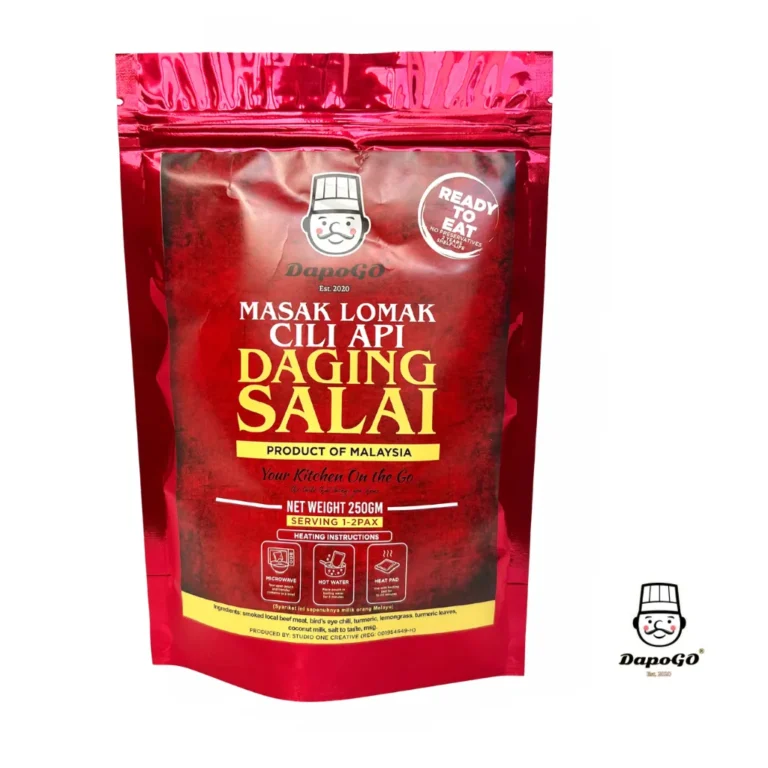
Retort processing sterilises food with high heat inside an airtight, sealed pouch — which means the food does not need preservatives to keep. The process does the preserving, not chemicals. And for the best result on the plate: warm the sealed pouch in hot water for 3–5 minutes, or empty it onto a plate for the microwave.
These are the two questions we hear most — “are there preservatives?” and “how do I heat this?” — so this article answers both in one place. The bigger picture of the technology behind the pouch is in How DapoGo Works.
On this page7 sections
Why doesn’t retort food need preservatives?
Preservatives exist for one job: slowing microbial growth in food that is exposed to air. Retort processing solves the same problem a different way — the food is cooked at high temperature after the pouch is sealed, destroying every microorganism inside while the seal keeps new ones out. No microbes, no growth, no need for anything to slow it down. That is why an unopened pouch keeps for up to 24 months at room temperature, per our published product spec — the full storage story is in How Long Does Retort Food Last?.
What is the best way to heat a pouch?
Three ways, depending on what you have:
- Hot-water soak (the easiest) — boil water, switch off the heat, and rest the unopened pouch in it for 3–5 minutes. Works at home, in a hotel room, or in a hostel with nothing but a kettle.
- Microwave — open the pouch and transfer the food to a microwave-safe plate or bowl first. Never put the pouch itself in the microwave: foil-lined pouches are not microwave-safe.
- Pan — empty the pouch into a pan over medium heat, stirring as it warms. Best for gravied dishes served for more than one person.
What are the common heating mistakes?
Three mistakes ruin more first meals than anything else: under-heating (thick dishes like rendang need the full time to warm through to the centre), microwaving the foil-lined pouch itself, and leaving an opened pouch out on the table for hours before eating. Once opened, treat retort food exactly like home cooking — serve it hot, and refrigerate leftovers in a covered container.
Can you eat it straight from the pouch, unheated?
The honest answer: for safety, yes — the food is fully cooked and sterile, not raw. For taste, no. The fats in dishes like rendang and gulai need heat to loosen and release their real aroma. Cold is the emergency option; hot is how it is meant to be eaten.
How long should each type of dish be heated?
Our general guidance is 3–5 minutes in hot water, but the dish decides which end of that range you need. Thin, gravied dishes like asam pedas warm through quickly — 3 minutes is usually enough. Thick, fatty dishes like rendang and gulai need the full 5 minutes, because heat takes longer to reach the centre of the pouch, and larger pouches (300g and up) also lean toward the 5-minute end. A simple test: press the middle of the pouch gently with tongs — if the centre still feels firm or cool, give it another minute or two. An extra minute of waiting beats a lukewarm middle every time.
Does the pouch itself affect the food?
A fair question people rarely ask out loud. Retort pouches are food-grade, multi-layer packs designed specifically to be cooked in — the sterilisation happens with the food already sealed inside, so the pouch material is chosen to withstand that heat safely. It is the same packaging class used for military and airline rations, where reliability is not negotiable. What matters at home is simply the seal: an intact pouch keeps everything out, and a damaged, swollen or leaking one should be discarded rather than tested.
What is a heat pad, and when is it useful?
For situations with no kettle, stove or microwave — on the road, outdoors, mid-journey — we make a Heat Pad (RTE food warmer) and a Heat Box & Pad Set. They heat a pouch with no flame and no electricity, so a hot meal is possible far from any kitchen. Many customers pack them for pilgrimage and long trips — a use we cover in our travel and umrah food guide.
Want to try DapoGo?
WhatsApp 011-5501 3391