Meals On the Go
Halal Food for Muslim Tour Groups: Australia & New Zealand
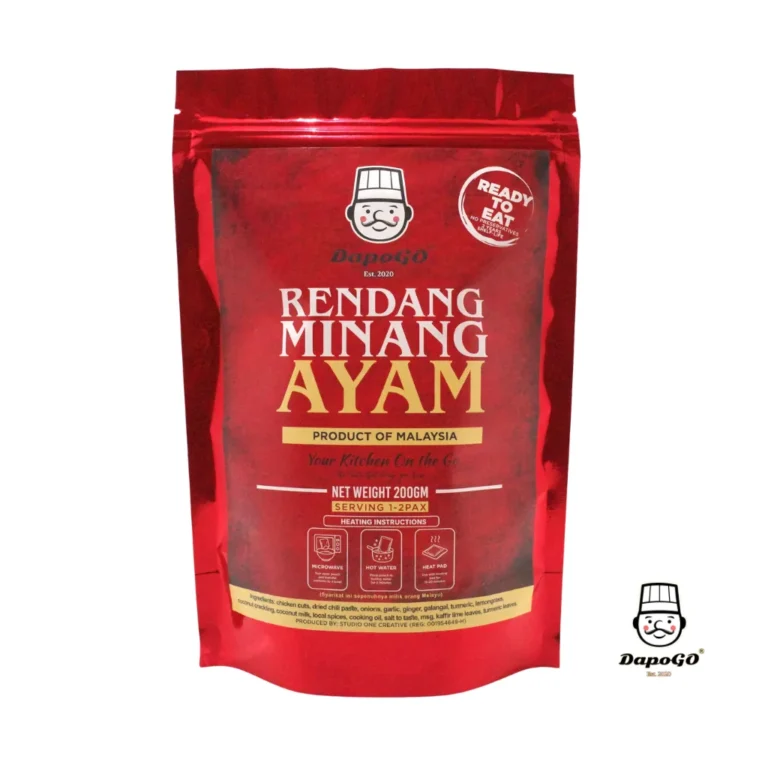
Rendang Minang Ayam: chicken in a retort pouch, the first choice for an Australia or New Zealand bag.
A Muslim tour group can carry Malaysian chicken dishes in retort pouches into Australia and New Zealand, subject to declaration and inspection, but should leave Malaysian beef and lamb dishes at home. Australia only accepts retorted meat made in a foot-and-mouth-disease-free country, poultry excepted, and Malaysia is not on its list. New Zealand allows retorted poultry up to 2 kg.
This guide is for tour operators and group leaders taking Muslim groups to Australia and New Zealand. DapoGo cooks its ready-to-eat dishes in its own kitchen at the Melaka Halal Hub and publishes ingredient lists for its products, which is what a biosecurity officer reads. It belongs to our guide to when ready-to-eat meals earn their place, alongside our guides to Europe, the UK and Japan and South Korea and Taiwan.
At a glance
- Australia: declare food on the Incoming Passenger Card; officers may inspect it.
- Australia accepts retorted meat only from an approved FMD-free country named on the label. That condition does not apply to poultry.
- New Zealand accepts chicken retorted in a sealed container, unopened, up to 2 kg.
- New Zealand: beef, goat or sheep from a country not on its list, do not bring.
- Australia does not penalise a traveller who declares everything; New Zealand can fine an undeclared item NZD$400 on the spot.
On this page9 sections
Can you bring Malaysian ready-to-eat food into Australia and New Zealand?
Yes, with conditions that turn on the ingredient, not the halal status, and everything is declared. New Zealand treats “Any food – cooked, uncooked, fresh, preserved, packaged or dried” as a potential risk good, and its food page warns that a declared item may still be refused clearance. Australia does not allow uncanned meat, vacuum-sealed included, without an import permit, which rules out home-packed meat dishes.
| What you pack | Australia | New Zealand |
|---|---|---|
| Chicken in a retort pouch | Allowed for personal use if commercially made, retorted and shelf stable; the FMD-country rule does not apply to poultry | Allowed if retorted in a sealed container, commercially packed, unopened and not refrigerated. 2 kg limit |
| Retorted beef or lamb | Only from an approved FMD-free country. Malaysia is not listed | Only from listed countries. Malaysia is not mentioned |
| Seafood | Crustaceans and molluscs are inspected to make sure they are dead and clean of other risk material | Allowed if identifiable and dead. 20 kg combined for non-salmon seafood |
| Rice | Raw rice is not permitted; microwave-ready rice pouches must meet import conditions | Cooked plant products with no meat or egg: up to 2 kg per product |
| Sambal and sauces | Commercially cooked, shelf stable for at least 6 months, in a hermetically sealed container | Allowed if free of liquid honey, fresh fruit or vegetables, raw seeds, citrus peel and meat |
Checked against the Australian Border Force and New Zealand Ministry for Primary Industries pages on 23 October 2026. For anything not listed, check Australia’s BICON import-conditions database.
Why is chicken in a retort pouch treated differently from beef?
Because the red-meat rules in both countries follow foot-and-mouth disease (FMD), and FMD is about where the meat was made. Australia’s wording is exact: “products must be manufactured in an approved FMD-free country and the country of manufacture must be listed on the product label (note this requirement does not apply to canned poultry meat)”. Products that fail “will be destroyed”.
Australia’s FMD-Free Country List names Singapore, Japan and New Zealand but not Malaysia. We read the version effective 19 December 2025; the one later amendment, on 18 March 2026, removed Greece. New Zealand lists the countries it takes beef from, including Australia, Japan and the UK, and adds: “If the country of origin is not mentioned, do not bring it.”
The packaging matters too. Australia defines retorting as cooking food in an unopened, hermetically sealed container until commercially sterile, and says “Vacuum-packed products are NOT retorted.” More on the process in what retort processing is.
A 2018 travel blog still cited in AI answers misses this split: “canned meat , aka daging/ayam dalam tin is also allowed”, beef and chicken alike.
Which DapoGo pouches fit an Australia or New Zealand itinerary?
Build the bag around chicken. Two of DapoGo’s chicken dishes suit best: their published ingredient lists carry no beef or dairy, and any other chicken dish needs the same check. Seafood and rice can go in too, declared, for the officer to decide.
| Product | Main ingredients | Australia | New Zealand |
|---|---|---|---|
| Rendang Minang Ayam (200gm) | Chicken, dried chilli, kerisik, coconut milk, spices | Retorted poultry: FMD-country rule does not apply | Retorted poultry, within 2 kg |
| Sambal Bomblado Ayam (200gm) | Chicken, red and green bird’s-eye chilli, asam keping, lime leaf | Retorted poultry: FMD-country rule does not apply | Retorted poultry, within 2 kg |
| Sotong Kicap Berempah | Squid, soy sauces, spices | Inspected. Confirm before buying in bulk | Identifiable, dead seafood |
| Sambal Jering Atok | Chilli, jering, anchovies | Sauce with an animal ingredient: check the anchovy conditions in BICON | Anchovies count as seafood. Declare |
| Nasi Putih Basmathi (220gm) | Basmati rice, filtered water | Rice pouches must meet import conditions. Confirm in BICON first | Cooked plant product, up to 2 kg |
| Rendang Minang Daging | Beef | Leave at home | Leave at home |
Our Chili Oil contains dried shrimp; Australia allows products containing dried prawns if all import conditions are met, so declare it. DapoGo states its pouches keep up to two years at room temperature, so order weeks ahead.
How much can a group carry?
New Zealand’s poultry allowance is the limit a group meets first. Its 2 kg equals ten 200gm chicken pouches by net weight, so leave a margin for packaging. DapoGo states one pouch of Rendang Minang Ayam serves 1–2 people, so one meal for 20 people is 10 to 20 pouches, or 2 to 4 kg net: over the limit if one person carries it.
MPI’s page does not say whether the 2 kg is counted per traveller, so spread the chicken across participants’ bags and ask MPI before a large order.
New Zealand allows up to 20 kg of non-salmon seafood combined, and Australia allows retorted canned bony fish up to 10 kilograms per passenger. For cabin versus hold, see hand luggage or checked baggage.
What happens if someone does not declare?
Not declaring is the costly choice. New Zealand can fine a false declaration NZD$400 on the spot. In Australia, false information can lead to an infringement notice, civil penalty proceedings or prosecution, and a cancelled visa. Declaring protects you there; the Australian Border Force states: “You will not be penalised under the Biosecurity Act 2015 if you declare all goods, even if they are not allowed into Australia.”
Australia also lets travellers drop food in terminal bins before screening. New Zealand is stricter about honest mistakes: its NZD$400 instant fine carries no criminal conviction, but MPI lists the excuses it does not accept, including “because you didn’t know the rules or what was in your baggage”. Deliberate smuggling can mean a fine of up to NZD$100,000 and up to five years in prison. MPI also expects travellers to know what is in the bags of anyone under 18 travelling with them.
A pre-departure checklist for operators
- Strike every beef and lamb dish from the shopping list for both countries.
- Choose chicken pouches with a clear ingredient list, and carry printed copies of each list.
- Split the chicken so no one participant carries more than 2 kg for New Zealand, and confirm with MPI before a large order.
- Brief the group: tick food on the arrival declaration.
- If in doubt at the counter, declare it or bin it.
FAQ: carrying halal food to Australia and New Zealand
Can we bring beef rendang to Australia or New Zealand?
Not if it was made in Malaysia. Australia requires retorted meat to come from an approved FMD-free country, and Malaysia is not on its list. New Zealand says “If the country of origin is not mentioned, do not bring it.” Pack chicken rendang instead.
Does a halal logo exempt food from biosecurity?
No. None of the Australian or New Zealand official pages quoted here mentions an exception for halal food. Officers assess the ingredient, the country of manufacture and the processing, so carry the printed ingredient list for each product rather than relying on the logo.
What if a declared item turns out not to be allowed?
In Australia, declaring protects you: the Biosecurity Act 2015 does not penalise a traveller who declares all goods, even if they are not allowed. In New Zealand, a declared item may still be refused clearance, but the NZD$400 instant fine is for a false declaration, not for declaring.
Plan your group’s food
If you are running a Muslim group to Australia or New Zealand, send us the destination, the dates and the headcount, and we will reply with a product mix and the ingredient lists to carry: WhatsApp DapoGo on 011-5501 3391.
Sources
- Australian Border Force: What food can you bring in? (updated 9 October 2026; accessed 23 October 2026)
- Australian Border Force: Declaring items when travelling to Australia (accessed 23 October 2026)
- Department of Agriculture, Fisheries and Forestry: FMD-Free Country List (accessed 23 October 2026)
- Ministry for Primary Industries NZ: Bringing food to NZ (accessed 23 October 2026)
- Ministry for Primary Industries NZ: What happens if you fail to declare (accessed 23 October 2026)
- Ministry for Primary Industries NZ: How to declare items when arriving in NZ (accessed 23 October 2026)
Want to try DapoGo?
WhatsApp 011-5501 3391