
Dish Guides
Retort Sambal vs Jarred Sambal: Shelf Life, Taste and Additives
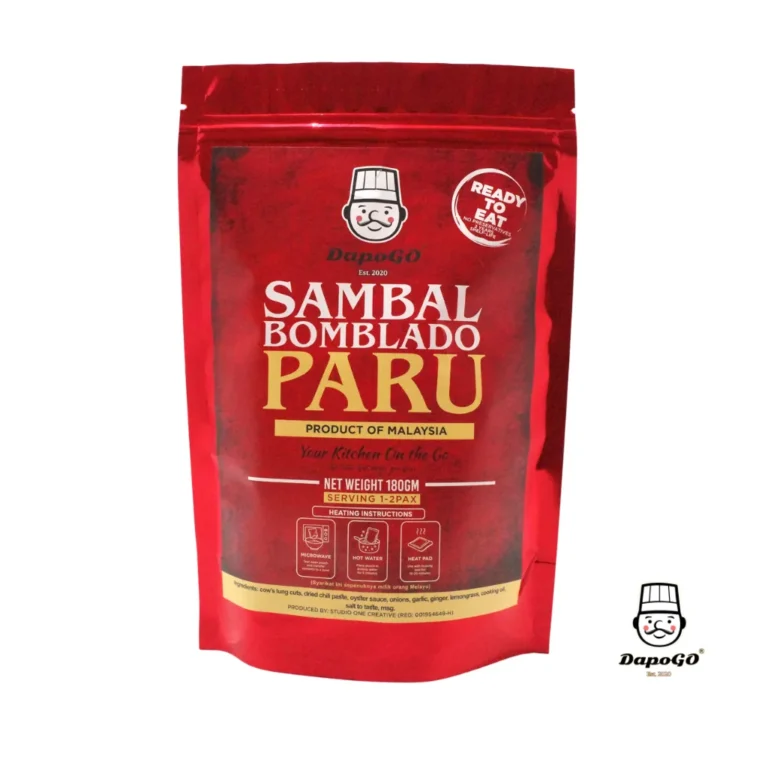
Jarred sambal typically leans on preservatives, high sugar or a thick layer of oil to survive the shelf; retort sambal is cooked and then sterilised inside its sealed pouch, so its keeping power comes from the process itself. The difference is in how it is processed — not necessarily in the recipe.
On this page7 sections
The comparison at a glance
| Retort sambal (pouch) | Typical jarred sambal | |
|---|---|---|
| Process | Cooked, sealed, then sterilised at high heat inside the pouch | Cooked and jarred; shelf life usually helped by preservatives, sugar or an oil cap |
| Shelf life (unopened) | DapoGo states up to 24 months at room temperature | Varies by brand and formulation |
| After opening | Finish it, or refrigerate and use promptly | Reseal and refrigerate per the brand’s instructions |
| Texture | Stir-fried and pounded styles come through well; close to home-cooked | Often sweeter or oilier, formulated for the shelf |
Why doesn’t a retort pouch need preservatives to keep?
Because food spoilage comes from microorganisms, and retort processing eliminates them directly. The sambal is cooked, sealed into an airtight pouch, then sterilised at high heat — inside the pack itself. No air gets in, nothing living survives, so nothing is left to spoil it on the shelf. The keeping power is the process, not an additive. The full explanation — including how to heat it properly — is in no preservatives? how retort food keeps.
Taste: what changes, what stays?
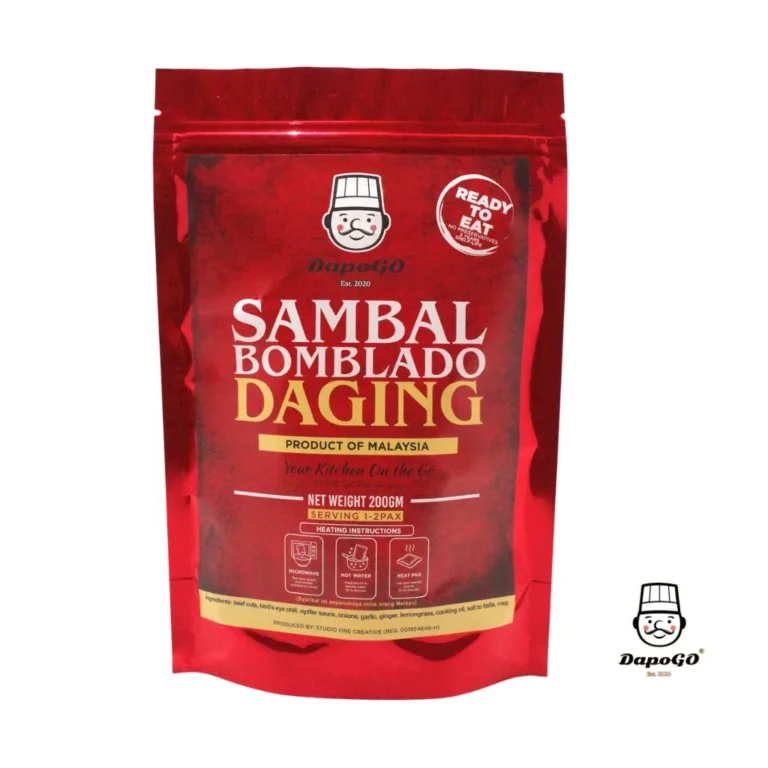
Honestly: the high heat of retort processing softens crisp elements like fried shallots or crunchy anchovies a little — that is physics, not a recipe fault. But the fundamentals of a sambal — the heat, tempoyak’s sourness, the saltiness of bilis, petai’s richness — survive, because it is cooked like a normal sambal before packing. Loaded sambals like Sambal Petai Udang (prawn and stink bean) or Sambal Tumis Cumi (dried squid) come out of the pouch as a full dish, not a concentrate.
Why does sambal suit retort processing so well?
Because sambal is, by nature, an oil-rich, intensely flavoured dish — two properties that come through high heat well. Oil carries the flavour of chilli, belacan and shallots with little change, and sambal is already cooked long over heat to begin with, so an extra thermal process does not change its character the way it would change, say, a crisp vegetable. That is why sambal was among the first categories DapoGo packed — from the five styles in its sambal category to the loaded sambal dishes in its lauk range. To understand the process itself, read what is retort processing?
How do you store it after opening?
This is where sterilisation’s advantage ends: once the pouch is opened, air and microorganisms get back in, and retort sambal behaves like home-cooked sambal again. Finish it in the same meal where you can; if there are leftovers, move them to a clean, covered container, refrigerate, and use them promptly. Do not keep leftovers in the opened pouch — it is engineered to stay sealed, not to be resealed. A jar, by contrast, is designed for repeated opening, so for a little-every-day condiment the jar format genuinely has the edge. That is the honest answer.
So which is right for you?
If you want sambal as a full dish — opened, heated, eaten with rice in one sitting — the retort pouch gives you cooked-food taste without shelf formulation. If you want a condiment to dab from the kitchen shelf every day, jarred sambal is more practical. Plenty of households keep both, for different jobs.
Which DapoGo sambal should you start with?
Go by taste: Sambal Tumis Bilis Oldskool for the classic anchovy stir-fry, Sambal Lenyek for the pounded style, Sambal Tempoyak Bilis Cili Api if you want sour-hot fermented durian heat. The whole family — with heat levels and pairings — is mapped in the Malaysian sambal guide, and everything lives in the RTE Sambal category.
Want to try DapoGo?
WhatsApp 011-5501 3391